 how-to
Benefits of Early Myopia Intervention: A 2026 Guide
Last Updated: October 23, 2026
Quick Summary
Early myopia intervention is the practice of detecting and managing nearsightedness in children before it becomes severe. When myopia is identified and managed early, families have options to slow or reduce progression, protecting long-term eye health and reducing the risk of serious complications like retinal detachment, glaucoma, and cataracts that can threaten vision decades later.
- Most myopia progression happens between ages 8 and 14, making early detection during this critical period essential.
- Myopia control lenses can reduce progression rates by 30 to 50 percent when worn daily.
- Untreated progressive myopia increases risk of retinal detachment, myopic maculopathy, glaucoma, and cataracts.
- Treatment options include specialty lenses, multifocal contacts, orthokeratology, low-dose atropine drops, and red light therapy.
- Regular eye exams every 3 to 6 months track treatment effectiveness and allow for adjustments if needed.
Table of Contents
- Why Early Myopia Intervention Matters for Children
- How Myopia Management for Children Slows Progression
- Myopia Control Lenses for Kids: What You Need to Know
- Understanding Myopia Progression in Children
- Long-Term Effects of Childhood Myopia Without Intervention
- Treatment Options, Timelines, and Realistic Outcomes
- Getting Started: A Step-by-Step Path to Early Detection and Care
- Frequently Asked Questions
Why Early Myopia Intervention Matters for Children
Early myopia intervention is the practice of detecting and managing nearsightedness in children before it becomes severe. At Corner Optical, we understand that catching myopia early can make a meaningful difference in a child's long-term eye health and quality of life.
Myopia, or nearsightedness, affects how the eye focuses light. In children with myopia, the eye grows too long or the cornea curves too steeply (Global perspectives on childhood myopia: addressing the rising epidemic).
The stakes are real. Progressive myopia can lead to complications including retinal detachment, myopic maculopathy, glaucoma, and cataracts (Reducing the Global Burden of Myopia by Delaying the Onset of Myopia and Reducing Myopic...).
Early detection changes this trajectory. When myopia is identified and managed early, families have options to slow or reduce progression.
How Myopia Management for Children Slows Progression
Myopia management for children works by addressing the underlying cause of progression: excessive eye growth. When a child's eye grows too long, light focuses in front of the retina, creating blurriness. Myopia control strategies interrupt this growth pattern.
Research shows that specialized optical treatments and certain medications can reduce the rate of eye elongation. This slowed growth translates to slower prescription changes.
The mechanism is straightforward. Peripheral vision plays a role in eye growth. When light hits the outer edges of the retina, it sends signals that influence how the eye develops. Myopia control lenses and other treatments alter this peripheral signal, essentially telling the eye to grow less aggressively.
Consistent use matters. The more regularly a child uses a myopia control treatment, the better the results. Adherence to daily wear schedules or nightly treatments directly impacts how much progression is prevented.
Myopia Control Lenses for Kids: What You Need to Know
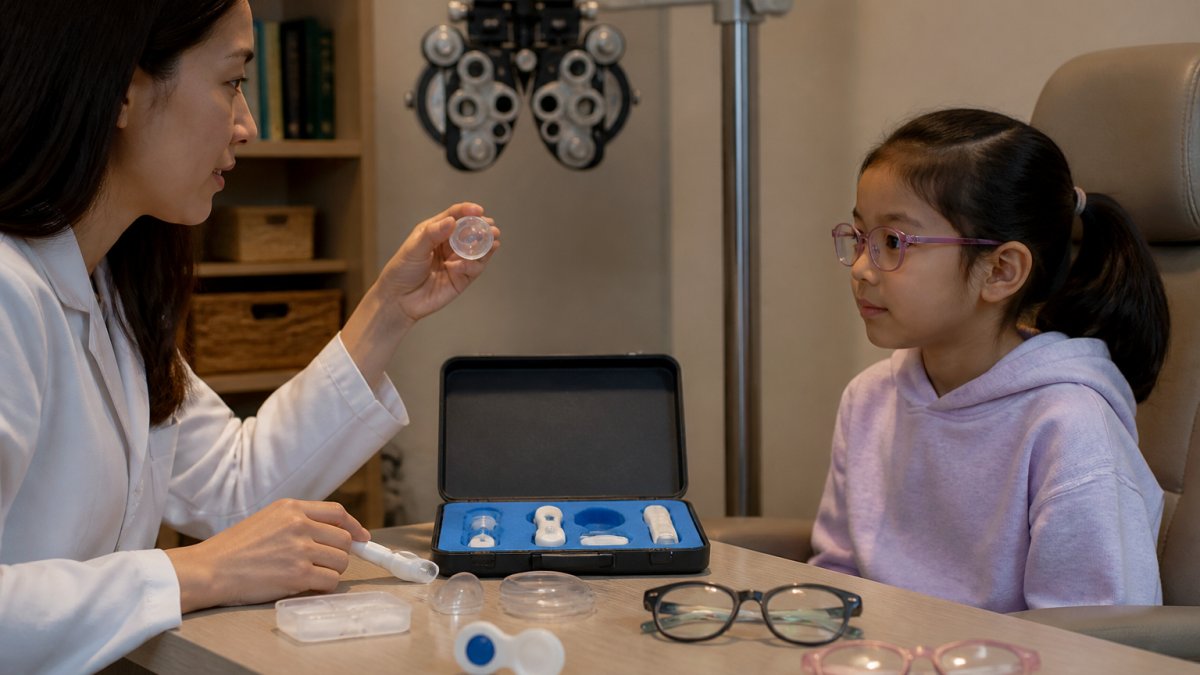
Myopia control lenses for kids are specialty eyeglass lenses designed specifically to slow myopia progression. Unlike standard corrective lenses, these lenses use optical technology to manage peripheral vision and reduce the stimulus for eye growth.
Several types of myopia control lenses exist:
- Multifocal lenses add extra focusing power in the lower portion of the lens, helping the eye relax during near work
- Peripheral defocus lenses use specially designed zones to blur peripheral vision slightly, reducing the growth signal
- Aspheric lenses alter the lens shape across the entire surface to manage how light focuses across the eye
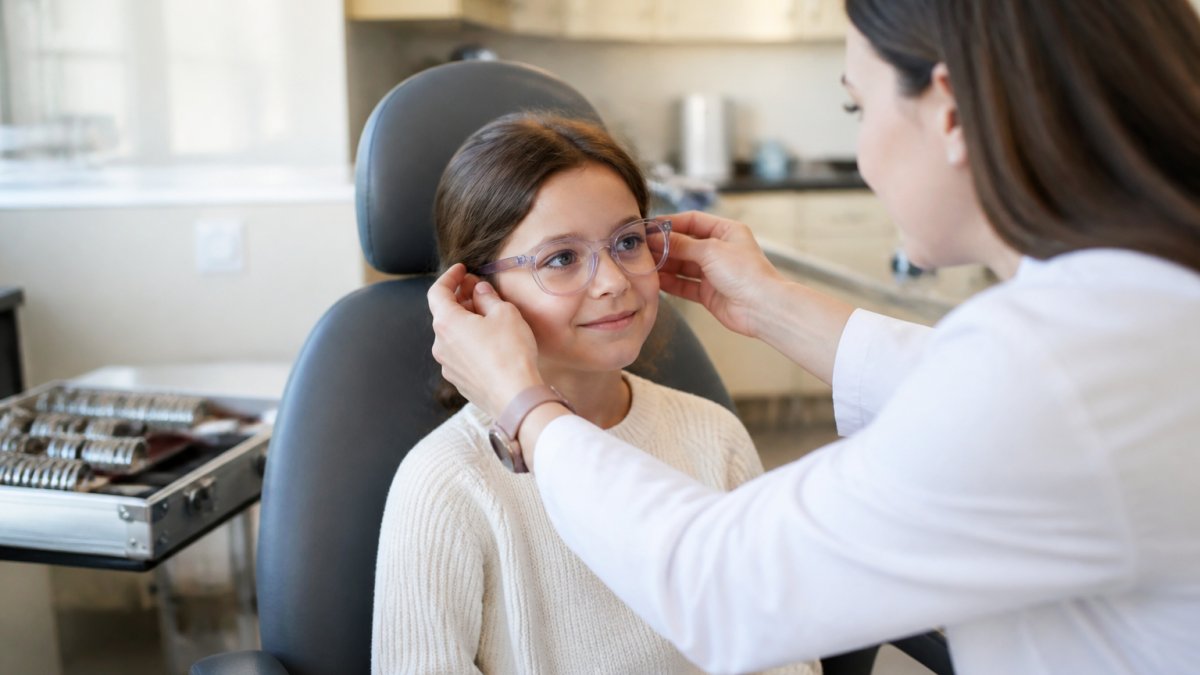
Children typically wear these lenses during waking hours, just like regular glasses. They're comfortable and don't require special care beyond normal eyeglass maintenance. Many children adapt quickly because the lenses look like standard eyeglasses.
Effectiveness varies by child. Some children see progression rates cut in half. Others experience more modest slowing. Age, initial prescription strength, and individual eye characteristics all influence how well these lenses work for a specific child.
During your appointment, we assess whether these lenses are appropriate for your child's specific situation and discuss realistic expectations for outcomes.
Understanding Myopia Progression in Children
Myopia progression in children follows predictable patterns. Most children experience the fastest changes between ages 8 and 14. The rate of progression typically slows during the teenage years and stabilizes by the early 20s.
Eye growth and axial elongation
The physical mechanism behind myopia is axial elongation, the eye growing too long from front to back. In a healthy eye, light focuses precisely on the retina. In an eye with myopia, the eye's length causes light to focus in front of the retina instead.
Children's eyes are still developing. The eyeball continues to grow until the late teens or early 20s. In children with myopia, this growth accelerates. Each year, the eye may grow an additional 0.2 to 0.5 millimeters longer than normal. Over several years, this compounds into significant prescription changes.
Axial elongation is measurable. Modern eye care includes tools to track eye length over time. This data shows exactly how much the eye is growing and how fast progression is occurring. Monitoring axial length helps determine whether a myopia control treatment is working effectively.
Risk factors and family history
Not all children develop myopia. Genetics play a major role. Children with one parent who has myopia face increased risk. Children with two myopic parents face even higher risk.
Environmental factors also matter:
- Near work intensity: Extended time on screens, reading, or detailed tasks
- Outdoor time: Children who spend more time outside tend to have lower myopia risk
- Age of onset: Myopia appearing earlier in childhood often progresses faster
These risk factors interact. A child with a family history of myopia who spends significant time on near work and little time outdoors faces the highest progression risk. Understanding your child's individual risk profile helps guide decisions about myopia management.
Long-Term Effects of Childhood Myopia Without Intervention
Untreated myopia creates a cascade of long-term risks. A child whose myopia progresses unchecked may reach a high prescription by adulthood. High myopia, typically defined as prescriptions stronger than -6.0 diopters, carries significant health implications (Nearsightedness: What Is Myopia?).
Progressive myopia increases the risk of serious eye conditions:
- Retinal detachment: The retina separates from the back of the eye, threatening vision
- Myopic maculopathy: Degeneration in the central retina, affecting detailed vision
- Glaucoma: Increased eye pressure damaging the optic nerve
- Cataracts: Clouding of the lens, typically appearing earlier in high myopia
These conditions may not appear until adulthood or later life. A 10-year-old with unchecked myopia progression faces decades of elevated risk for vision-threatening complications.
Beyond physical eye health, high myopia affects quality of life. Thick, heavy glasses become necessary. Contact lens wear becomes more challenging. Certain careers requiring excellent uncorrected vision become unavailable. The cumulative burden of managing high myopia throughout adulthood is substantial.
Early intervention prevents this trajectory. By slowing progression during childhood, families reduce the likelihood of reaching high myopia. This protects both immediate comfort and long-term eye health.
Treatment Options, Timelines, and Realistic Outcomes
Multiple treatment approaches exist for myopia management. Each offers different benefits and fits different situations.
Optical treatments and specialty lenses
Myopia control lenses represent the first-line optical approach. These are prescribed during a comprehensive eye exam and worn daily. Results typically appear within 6 to 12 months. Most children see progression rates drop by 30 to 50 percent.
Multifocal contact lenses offer another optical option. These are soft contact lenses with multiple focusing zones. They work similarly to multifocal glasses but may provide better optical performance for some children. Contact lenses require more care and responsibility, so they're typically recommended for older children who can manage daily cleaning and insertion.
Orthokeratology is a specialized contact lens approach. Children wear rigid contact lenses overnight. The lenses gently reshape the cornea, temporarily correcting myopia. During the day, children have clear vision without glasses or contacts. The effect reverses when lenses aren't worn, so treatment must be consistent. Orthokeratology can slow progression, though it requires nightly compliance.
Pharmacological options and monitoring
Low-dose atropine eye drops represent the pharmacological approach to myopia control. Children instill one drop in each eye daily, typically in the evening.
Atropine effectiveness varies. Some children see significant slowing of progression. Others experience modest benefits. Side effects can include light sensitivity and difficulty focusing on near objects.
Red light therapy has emerged as a newer approach. Children spend 3 to 5 minutes daily looking at red light through a specialized device.
Treatment timelines require patience. Most myopia management approaches take 3 to 6 months to show measurable effects. Full benefits often appear over 12 months or longer. Realistic expectations matter.
Monitoring is essential with any treatment. Regular eye exams, typically every 3 to 6 months, track whether treatment is working.
Several treatment approaches can slow myopia progression, each with different timelines and effectiveness rates.
| Treatment | How it works | Timeline to results | Effectiveness |
|---|---|---|---|
| Myopia control lenses | Specialty glasses worn daily | 6 to 12 months | 30 to 50 percent reduction |
| Multifocal contact lenses | Soft lenses with multiple zones | 6 to 12 months | 30 to 50 percent reduction |
| Orthokeratology | Rigid lenses reshape cornea overnight | 6 to 12 months | Slows progression with nightly use |
| Low-dose atropine drops | Daily eye drops relax focusing muscles | 3 to 6 months | Varies by child |
| Red light therapy | 3 to 5 minutes daily with device | 3 to 6 months | Early research suggests benefit |
Getting Started: A Step-by-Step Path to Early Detection and Care
The path to effective myopia management begins with detection. Here's how to get started:
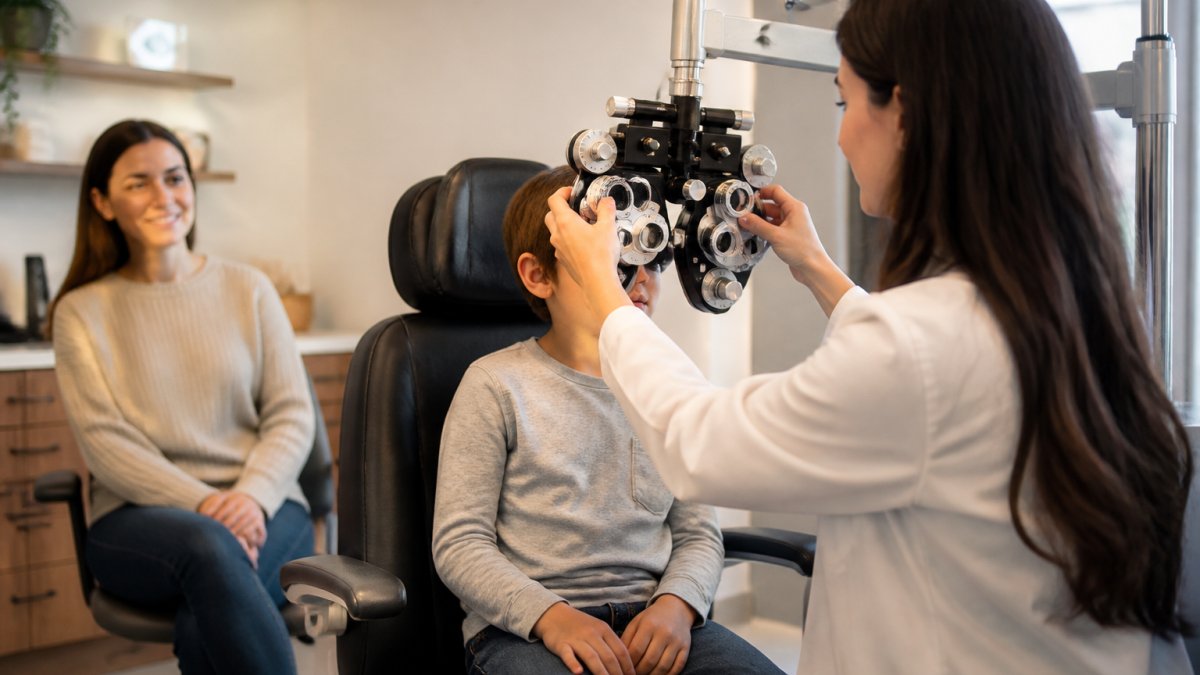
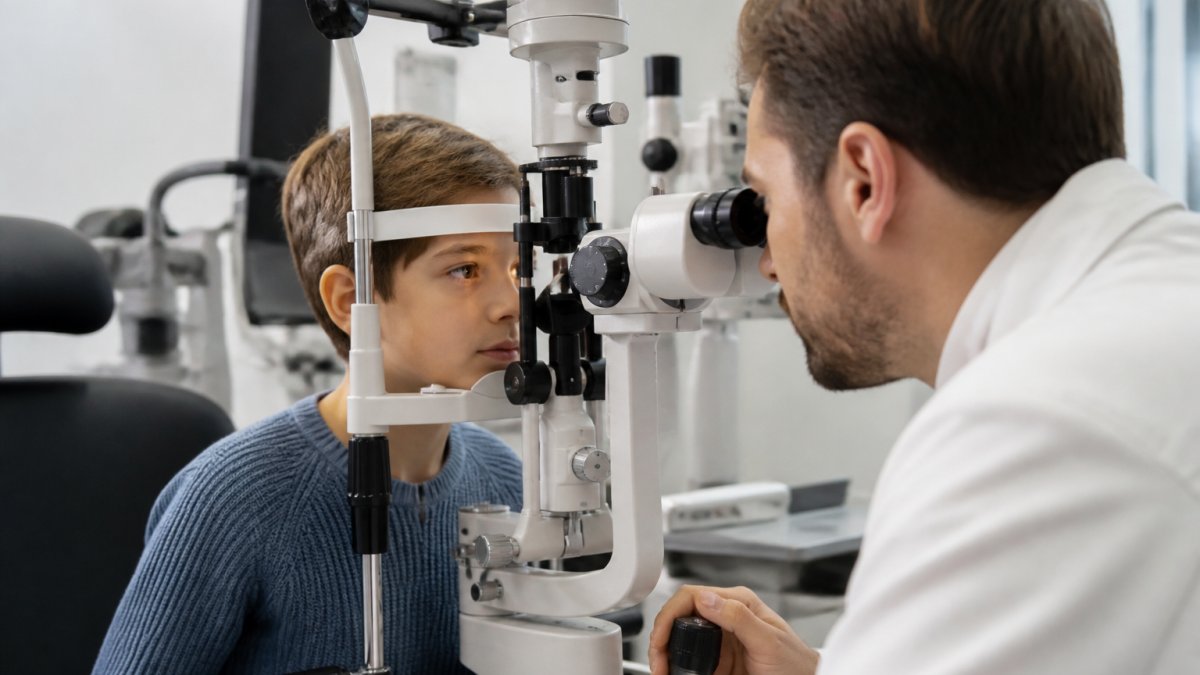
Step 1: Schedule a comprehensive eye exam. Learn about family eye care services available for kids, teens, and adults. This is different from a basic vision screening. Comprehensive eye exams include detailed assessment of eye health, refractive error, eye length measurement, and evaluation of myopia risk factors. A comprehensive exam includes detailed assessment of eye health, refractive error, eye length measurement, and evaluation of myopia risk factors. Your optometrist will discuss your child's visual history and family risk factors.
Step 3: Review treatment options. If myopia management is appropriate, your provider will explain available options.
Step 4: Start with the best fit for your family. Treatment selection depends on your child's age, prescription, lifestyle, and your family's preferences.
Step 5: Establish a monitoring schedule. Effective myopia management requires regular follow-up. Plan for eye exams every 3 to 6 months during active treatment.
Step 6: Support consistent treatment use. The best treatment only works if your child uses it consistently. Glasses must be worn daily.
Our comprehensive eye exams provide the detailed assessment needed to detect myopia early and identify the right management approach.
Early myopia intervention protects your child's vision for life. Progressive myopia during childhood can lead to high prescriptions and serious eye health risks in adulthood.
Frequently Asked Questions
What are the benefits of early myopia intervention?
Early myopia intervention can slow the rate of myopia progression, reducing the likelihood of high myopia and associated vision-threatening complications later in life. When caught early, children benefit from treatment options that help manage eye growth and maintain better long-term eye health. Regular monitoring and appropriate treatment also give families confidence in their child's visual development and daily activities.
How can early intervention slow myopia progression in children?
Early myopia management uses specialty spectacle lenses, multifocal contact lenses, orthokeratology, or low-dose atropine to reduce the stimulus for eye elongation. By controlling how the eye grows during childhood and adolescence, these treatments address the underlying refractive error progression rather than simply correcting existing myopia. Regular eye exams allow optometrists to monitor outcomes and adjust treatment as needed.
At what age should myopia screening start?
Comprehensive eye exams should begin in early childhood, typically around age 3-5, with regular follow-ups through school years. Early detection is critical because myopia often progresses most rapidly during childhood and adolescence. If a child shows signs of nearsightedness or has risk factors like family history of myopia, more frequent exams and earlier intervention become especially important.
What are the risks of untreated myopia in children?
Untreated or unmanaged myopia can progress to high myopia, which increases the risk of serious eye conditions including retinal detachment, myopic maculopathy, glaucoma, and cataracts later in life. High myopia also affects quality of life and daily activities. Early intervention and management help reduce these long-term risks and protect vision throughout adulthood.