 how-to
How to Maintain Handmade Acetate Frames at Home
Last Updated: October 28, 2026
Quick Summary
To maintain handmade acetate frames at home, rinse them under lukewarm water, clean with one drop of mild dish soap, and pat dry with a soft cloth. Avoid alcohol, acetone, paper towels, and heat, since these can dull the finish or warp the frame.
- Rinse frames under lukewarm water for 10 to 15 seconds before cleaning.
- Use one small drop of mild dish soap and a soft toothbrush for hinges.
- Pat frames dry with a soft cloth instead of letting them air dry in sunlight.
- Store glasses in a hard case, away from heat such as dashboards and windowsills.
- Check hinge screws and temples monthly, and see an optician for cracks.
Table of Contents
- Why Handmade Acetate Frames Need Different Care
- What You'll Need for Routine Frame Care
- How to Clean Acetate Glasses Step by Step
- How to Polish Acetate Frames Without Damaging the Finish
- How to Store Eyeglasses to Protect Acetate
- How to Prevent Glasses From Warping and Loosening
- When to Handle Repairs Yourself and When to Book an Adjustment
- Frequently Asked Questions
Why Handmade Acetate Frames Need Different Care
Handmade acetate frames look beautiful, but they need more care than cheap plastic frames. Acetate is a plastic made from cellulose, and it reacts to heat, harsh cleaners, and rough handling in ways metal frames do not. (Source: the American Academy of Ophthalmology's guidelines)
The biggest difference is the finish. Acetate is cut from solid sheets and polished by hand, so its color and shine sit on the surface. A scratch, a too-strong cleaner, or a hot dashboard can dull that finish.
Handmade frames also tend to have hand-set hinges and screws that loosen over time if unchecked. A quick look every few weeks catches small problems before they become bigger ones.
- Acetate reacts to heat, alcohol, and acetone
- Surface finish scratches and dulls with rough handling
- Hinges and screws loosen gradually with daily wear
What You'll Need for Routine Frame Care
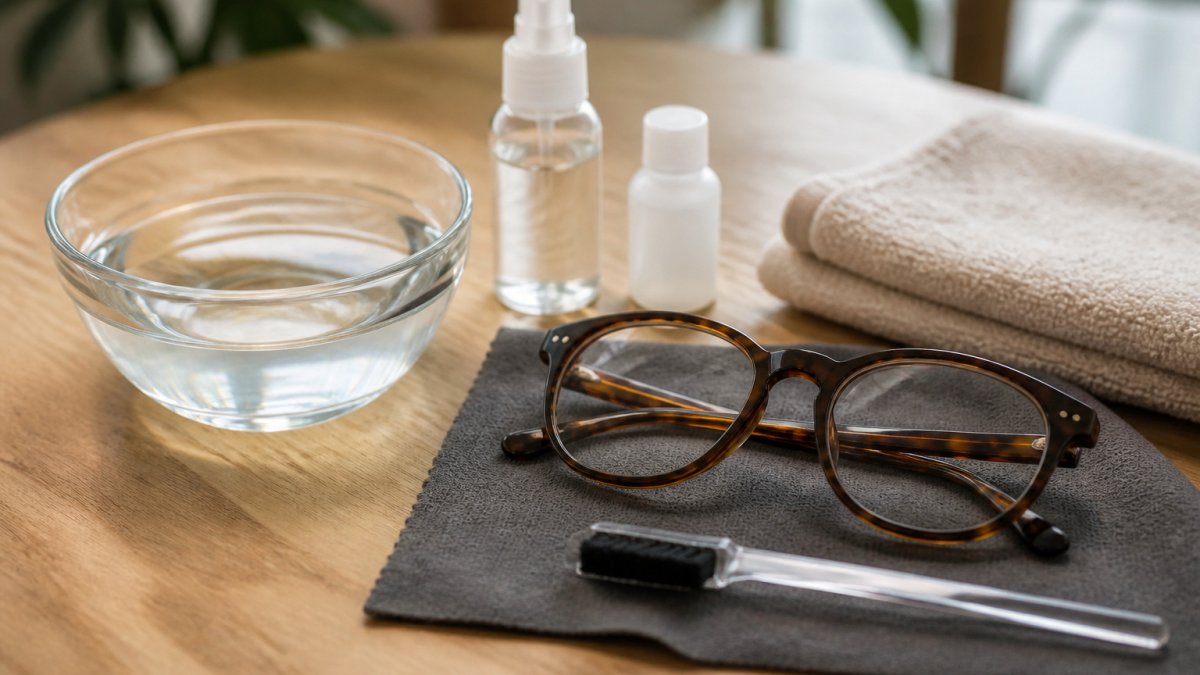
You do not need expensive tools for basic care. A few simple items cover most routine tasks. Keep them in one place so the routine is easy to follow.
Here is a short list of what to gather:
- Lukewarm tap water or distilled water
- A few drops of mild dish soap
- A soft, clean microfiber or eyeglass cloth
Avoid paper towels, tissues, and shirt hems. These can leave lint or tiny scratches on lenses and frames.
How to Clean Acetate Glasses Step by Step
Cleaning is the task you will do most often. Follow these steps each time to keep frames clean without damage.
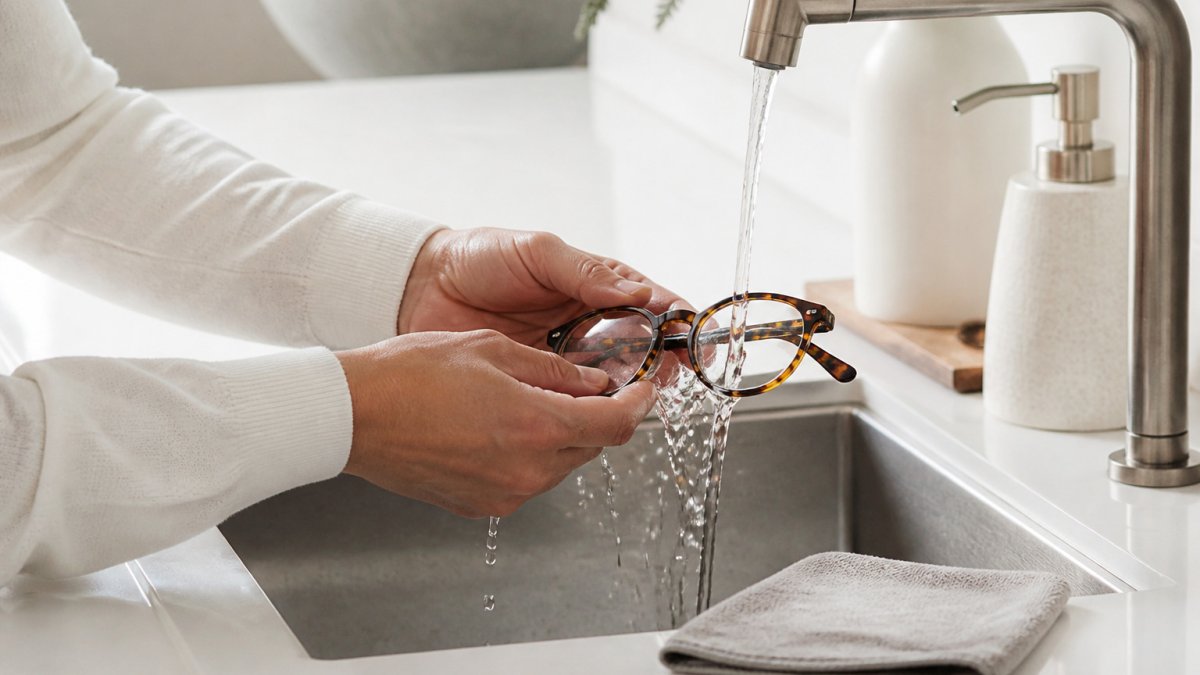
- Rinse the frames. Hold the glasses under lukewarm water for 10 to 15 seconds. This loosens dust and grit that could scratch the surface.
- Add a drop of soap. Put one small drop of mild dish soap on your fingertips. Gently work it over the frame front, arms, and nose pads.
- Brush the hard-to-reach spots. Use the soft toothbrush on the hinges and the area around the lens rims.
- Rinse again. Run lukewarm water over the frames until no soap remains. Soap left in crevices can build up and look cloudy.
- Pat dry. Use a soft cloth to pat the frames dry. Do not rub hard.
Can you use a stronger cleaner on stubborn grime? For acetate, no. Alcohol, acetone, and many household sprays can soften or cloud the surface.
A common mistake is leaving the frames to air dry on a windowsill. Sun and heat can warp acetate over time, so dry them with a cloth instead.
Lens Cleaning Without Residue
Clean lenses last so you do not wipe soap back onto them. Use the same mild soapy water, then rinse thoroughly.
Dry the lenses with a clean eyeglass cloth in small circles. If you see streaks, the cloth may be dirty or the soap may not be fully rinsed. Wash the cloth in warm water with no fabric softener, since softener leaves a film that causes smearing.
The cleaning steps and what to avoid, at a glance:
| Step | What to do | Time or frequency |
|---|---|---|
| Rinse the frames | Hold under lukewarm water | 10 to 15 seconds |
| Add soap | One drop of mild dish soap | Each cleaning |
| Brush crevices | Soft toothbrush on hinges and rims | Each cleaning |
| Rinse again | Lukewarm water until no soap remains | Until soap is gone |
| Pat dry | Soft cloth, do not rub hard | Each cleaning |
How to Polish Acetate Frames Without Damaging the Finish
Polishing is where handmade acetate frames differ most from mass-produced plastic. Acetate is cut from a solid sheet, then tumbled and hand-buffed through several grit stages before it reaches the optician. That hand-finishing is why the color and gloss sit in the top layer rather than in a sprayed-on coating. Once you buff through that layer, you cannot put it back, so home polishing should restore gloss, not remove material.
Why hand-finished acetate dulls
Three things dull a hand-polished surface:
- Micro-abrasion from wiping with dry paper towels, tissues, or a gritty cloth
- Chemical dulling from alcohol-based lens sprays, acetone, and ammonia glass cleaners, which attack the cellulose acetate surface
- Heat bloom from leaving frames on a dashboard or in direct sun, which can leave a cloudy haze that looks like scratches but is actually surface deformation
If the dullness is chemical or heat-related, polishing will not fix it, and buffing harder will only thin the frame. Clean first, inspect under bright light, and only polish if the surface is intact but lacks shine.
A safe hand-polishing routine
Work in a well-lit area and go slowly, a few minutes per frame, not seconds.
- Clean and dry first. Wash with lukewarm water and a drop of mild dish soap, rinse, and pat dry with a clean microfiber cloth. Polishing over grit grinds it into the surface.
- Start with a dry microfiber cloth. Buff the frame front and temples in one direction with light pressure. This alone restores gloss on lightly dulled acetate and is the safest step.
- Move to a dedicated acetate polish only if needed. Use a product labeled for acetate or plastic eyewear, not a metal polish, not a car wax, and not a toothpaste hack. Apply a pea-sized amount to the cloth, never directly to the frame.
- Buff one small area at a time. Work in short strokes, check the surface every few passes, and wipe off residue before it dries.
- Stop at the first sign of thinning. If the frame feels warm, looks uneven, or the color starts to look lighter in one spot, stop. That is material coming off.
Where home polishing ends and professional re-polishing begins
A frame maker or optician re-polishes acetate with graduated abrasives and a buffing wheel, then re-finishes the edges and hinge area. Book that when:
- The dullness covers the whole frame and does not lift with a dry cloth
- You can feel a lip or step where the finish has worn
- The frame has white stress marks near the hinge or bridge
Polishing do's and don'ts at a glance
- Do use a clean microfiber cloth and a polish made for acetate
- Do buff in one direction with light pressure
- Do stop and reassess every few passes
How to Store Eyeglasses to Protect Acetate
Storage matters as much as cleaning. Acetate softens and warps in heat, so keep glasses out of hot places.
Good storage habits include:
- Always use a hard case rather than a pocket or a dashboard
- Keep glasses away from direct sunlight and car windows
- Store them in a cool, dry room, not a bathroom or hot attic
A hard case protects the frame from bumps and keeps lenses from scratching against keys and coins.
How to Prevent Glasses From Warping and Loosening
Warping and loosening are the two failure modes that end a handmade acetate frame early, and both are almost always preventable. Acetate softens with heat, and hand-set hinges and screws take load every time the frame goes on and off. A short inspection routine catches both before they become repairs.
Why acetate warps
Cellulose acetate has a glass-transition range well below what a closed car reaches on a sunny day. In that heat, the material relaxes and takes the shape it is resting in, which is why frames left on a dashboard come back with a bent bridge, and frames stored lenses-down develop a curve in the front. The warp is not a defect; it is what acetate does when warm.
Common heat sources to keep frames away from:
- A closed car, even on a mild day
- A windowsill or a spot in direct sun
- A radiator, space heater, or stove hood
Why hinges and screws loosen
Handmade frames often use hand-set riveted or screwed hinges. Taking glasses off with one hand turns the temple into a lever, twisting the hinge and its screws. Over months, screws back out and hinge plates wear, so the frame sits crooked, slides down the nose, and puts uneven pressure on the bridge, the start of a stress crack.
A monthly hardware inspection
Set a recurring reminder and spend two minutes on this sequence:
- Check both hinge screws. Hold the frame up to a light and look at the screw heads. A screw that sits proud of the hinge plate has started to back out.
- Test the temples. Open and close each arm slowly. It should move smoothly with a little resistance, not flop, and not grind.
- Check the nose pads. Look for discoloration, hardening, or a pad that has rotated out of position. Worn pads shift the frame and cause uneven pressure.
- Sight the frame front. Hold it at eye level and look for a twist in the bridge or a temple that sits higher than the other.
- Tighten gently, never forcefully. Use a screwdriver sized for eyewear screws and turn only until the screw seats. Overtightening cracks the acetate around the screw hole, and that crack is not a home fix.
Warning signs that mean stop and see a professional
Some issues are safe to monitor at home. Others need an optician or frame maker before they get worse:
- A visible crack at the hinge, bridge, or screw hole
- A frame that will not sit level after a gentle adjustment
- A temple that feels loose no matter how the screw is tightened
Those signs usually mean the frame needs heat-based adjustment or a hinge repair, work that requires controlled heat and the right tools. For questions about your own eyes or vision, schedule an appointment with a qualified eye care professional.
Prevention habits that actually matter
- Two hands on, two hands off. Always hold the frame at the front and lift both temples together.
- Case it every time. A hard, padded case absorbs the bumps that loosen hinges.
- Never set frames lenses-down on a hard surface, rest them on the temples or in the case.
When to Handle Repairs Yourself and When to Book an Adjustment
Some tasks are safe at home; others need a professional. Knowing the difference protects your glasses and your eyesight.
You can usually handle these yourself:
- Cleaning and light polishing
- Tightening a loose screw gently
- Wiping the nose pads and lenses
Book a visit to an optician if you notice:
- A crack in the frame or near a hinge
- A frame that sits crooked or slides down your nose
- A lens that feels loose or pops out
Adjustments often need special tools and heat-based shaping that are not safe at home. If you want hands-on skill with frame making, you can explore the frame-making workshops instead of relying on home fixes. You can see the bespoke eyewear services and the fitting work done in Glenview if you want a frame built and fitted by hand.
For questions about your own eyes or vision, schedule an appointment with a qualified eye care professional.
Frequently Asked Questions
Is dish soap safe for cleaning acetate frames?
A small amount of mild, fragrance-free dish soap mixed with lukewarm water is generally a safe choice for cleaning acetate frames. Use only a drop or two, rinse thoroughly so no soap film remains on the lenses or hinges, and dry with a soft cloth. Avoid hot water, which can soften the acetate over time, and avoid alcohol-based wipes or acetone, which can dull or craze the surface. If you are unsure about a specific frame, a brief check with the optician who fitted it is a good next step.
How do you polish acetate frames without damaging them?
Polishing acetate works best as a light, occasional step rather than a regular routine. Start by cleaning the frame and drying it completely. Then use a soft cloth with a small amount of a mild polish made for acetate, rubbing gently in one direction along the surface. Stop as soon as the shine returns, since excessive buffing can thin the finish. Frames with deep scratches or cracks usually need professional attention rather than polishing at home.
How should you store acetate eyeglass frames?
Store acetate frames in a hard case when you are not wearing them, and keep the case out of direct sunlight, closed car interiors and hot areas near radiators or heaters. Heat can cause acetate to soften, shift and warp. Fold the arms closed and avoid setting the glasses lens-down on hard surfaces, which can scratch the lenses and stress the hinges. A case that cushions the frame also protects the nose pads and screws from loosening.
When should acetate frames be adjusted by an optician?
Book an adjustment if your glasses slide down your nose, sit unevenly, pinch behind the ears, or if the lenses no longer line up with your eyes. Loose screws, a wobbly hinge or a bent frame arm should also be checked by a professional, since forcing these at home can crack the acetate. Your optometrist or optician can assess fit, tighten hardware and reshape the frame safely. For questions about your own vision or eye health, schedule a consultation with a qualified eye care professional.