 comparison
Alternatives to Standard Retail Glasses: 2026 Guide
Table of Contents
- Why Consider Alternatives to Standard Retail Glasses
- Custom Prescription Glasses: Personalized Eyewear Design
- Online Prescription Glasses: Shopping from Home
- Eyeglass Lens Options Beyond Standard Single Vision
- Alternatives to Wearing Glasses: Vision-Correction Procedures
- Total Cost of Ownership: What You Really Spend
- Accessibility and Eligibility: Who Can Use Each Option
- How to Choose the Right Alternative for Your Vision Needs
- Frequently Asked Questions
Last Updated: October 16, 2026
Why Consider Alternatives to Standard Retail Glasses
Most people assume there's only one way to get glasses: walk into a retail location, pick from the shelf, and hope it fits.
The truth is, alternatives to standard retail glasses have expanded dramatically: custom frames, online eyewear, advanced lens technologies, or surgical options.
This guide covers the real alternatives, who they work best for, and what to know before choosing.
Custom Prescription Glasses: Personalized Eyewear Design
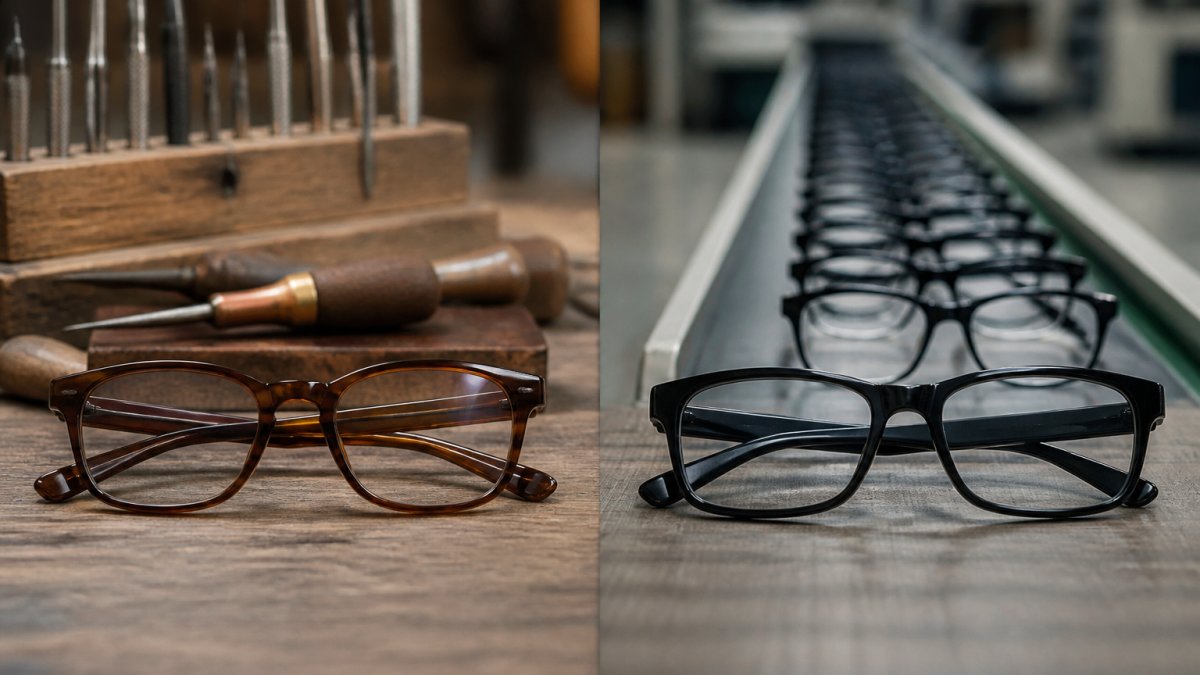
Custom prescription glasses work differently: instead of selecting from existing inventory, you work with an optician to design frames matching your exact face geometry, prescription, and style.
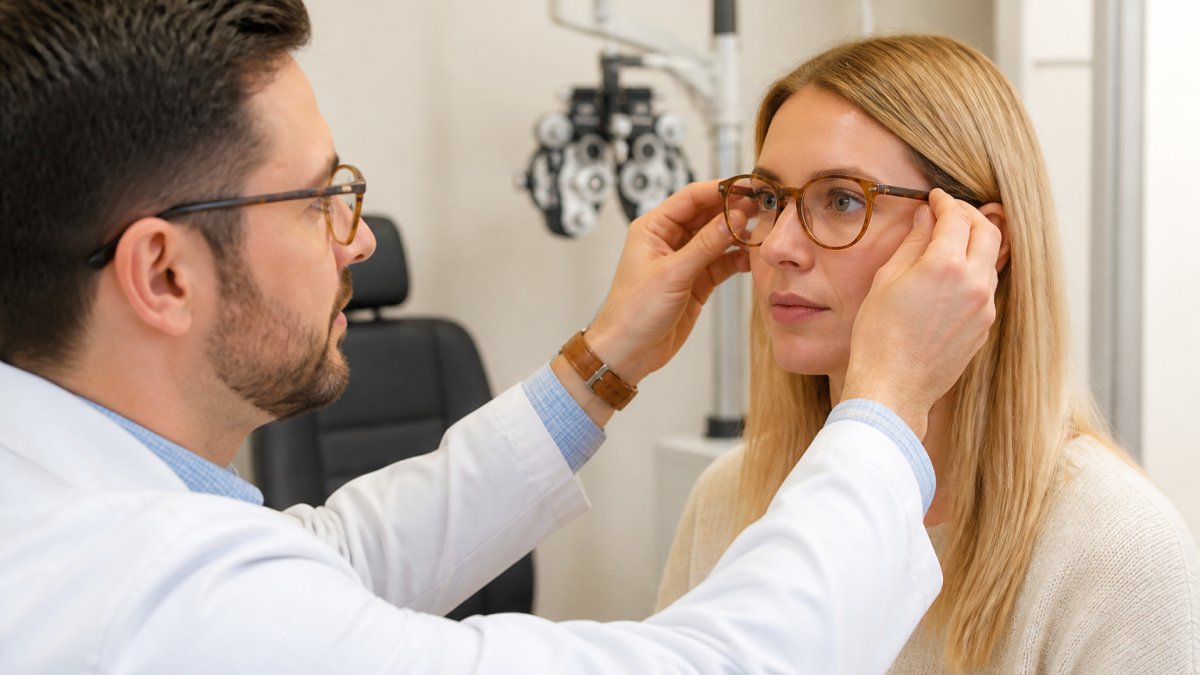
The Optical Kitchen Approach
The Optical Kitchen is a specialized design process where frames are handcrafted to your specifications.
This solves real problems standard retail frames create. If you have a narrow bridge, wide face, or high prescription, standard frames often slip, pinch, or distort your vision.
Corner Optical specializes in this process, working with renowned and independent eyewear brands to create pieces that balance aesthetics with function, so your eyewear stays on your face and reflects your style.
Frame Materials and Styles
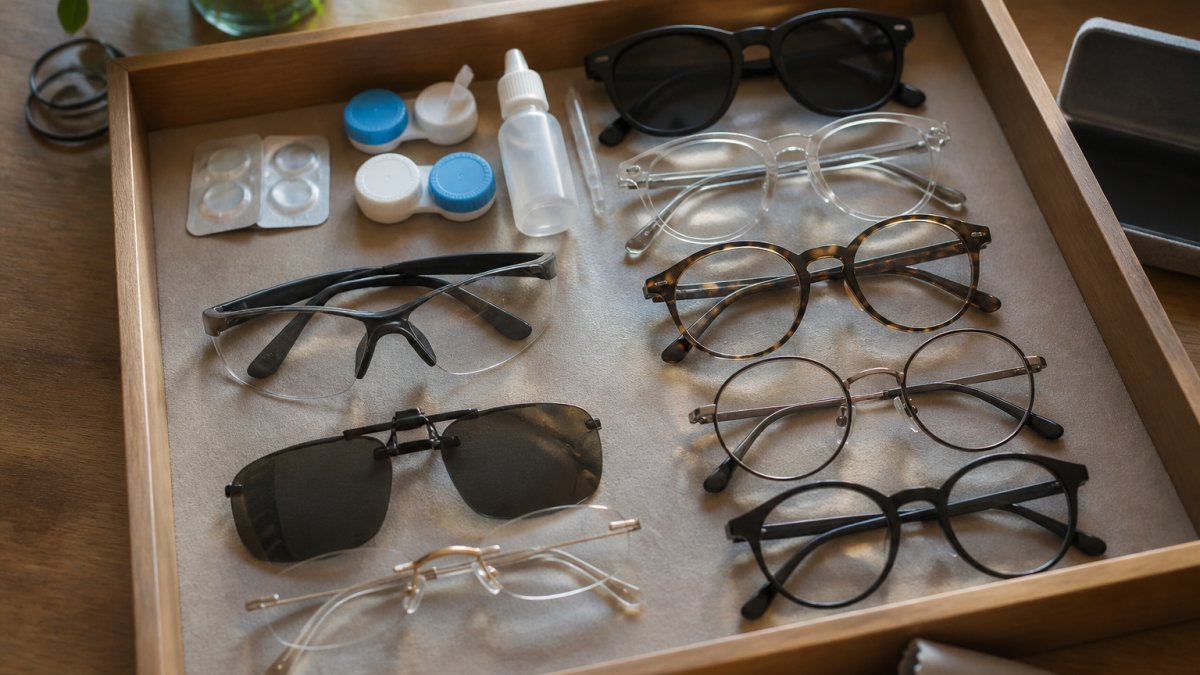
Material choice affects durability, weight, appearance, and cost. Common options include plastic (lightweight, colorful, affordable), wire-rim (minimalist, adjustable nose pads), titanium (durable and lightweight), and acetate (vintage appeal, rich colors).
Each has trade-offs: plastic offers the widest color range but may need adjustment; wire-rim frames require careful handling; titanium costs more but lasts longer.
Custom design lets you match your actual style preferences, bold or subtle, rather than choosing between what retailers stock.
Online Prescription Glasses: Shopping from Home
Online eyewear has split into distinct business models, and knowing which one you're buying from changes the price, fit support, and return terms. Treating them as one category is the most common buyer mistake.
The Four Online Models
- Direct-to-consumer (DTC) brands. The company designs, manufactures, and sells its own frames. Warby Parker is the best-known example, operating a website and physical showrooms. Pricing is fixed and transparent, and the brand controls quality end to end.
- Online marketplaces. These sites aggregate many brands and frame styles under one checkout. Zenni Optical built its reputation on very low starting prices, while GlassesUSA.com carries a broad mix and has been cited by Good Housekeeping as a best overall pick in its comparison of online glasses retailers. Because inventory comes from many suppliers, quality and return terms can vary by listing.
- Try-at-home services. You request several frames, keep them for a set window (commonly five to seven days), and mail back what you don't want, paying only for what you keep. This solves the fit-uncertainty problem that keeps people in stores.
How the Ordering Process Actually Works
- Get a current prescription. In the U.S., an eyeglass prescription is generally valid for one to two years depending on state law, so check the expiration date first.
- Measure your pupillary distance (PD). This is the distance between your pupils in millimeters, required to center the lenses over your eyes. Some retailers measure it; others ask you to enter it or use a virtual tool. A wrong PD is a common cause of headaches from online glasses.
- Note your current frame measurements. Most frames print three numbers inside the temple: lens width, bridge width, and temple length, all in millimeters. Matching these to a frame you own is the most reliable way to get a good fit without trying frames on.
- Upload the prescription and choose lenses. You'll select lens type, material, and coatings at checkout.
- Wait for fulfillment. Turnaround is commonly one to two weeks, though some DTC brands and rush options are faster.
Quality and Safety Checks Before You Buy
Online ordering removes the optician who would normally catch a measurement error, so the burden shifts to you. Run this checklist:
- Prescription accuracy. Confirm the retailer requires a valid prescription from a licensed provider rather than letting you self-enter a power. Prescription eyewear is regulated as a medical device by the FDA, and a legitimate seller will say so.
- Who fills the order. Ask whether a licensed optician or optical lab reviews the order. This is where a wrong axis or an off-center progressive can be caught before shipping.
- Return and warranty terms. Look for a stated return window, whether returns are free or carry a restocking fee, and whether the warranty covers scratches, coatings, and frame defects separately.
Who Online Works Best For
Online ordering tends to work well for straightforward single-vision prescriptions, adults who already know their frame measurements, and anyone buying a backup pair. It tends to work poorly for complex prescriptions, children, and anyone who has never had a comfortable pair of glasses to measure against.
Eyeglass Lens Options Beyond Standard Single Vision
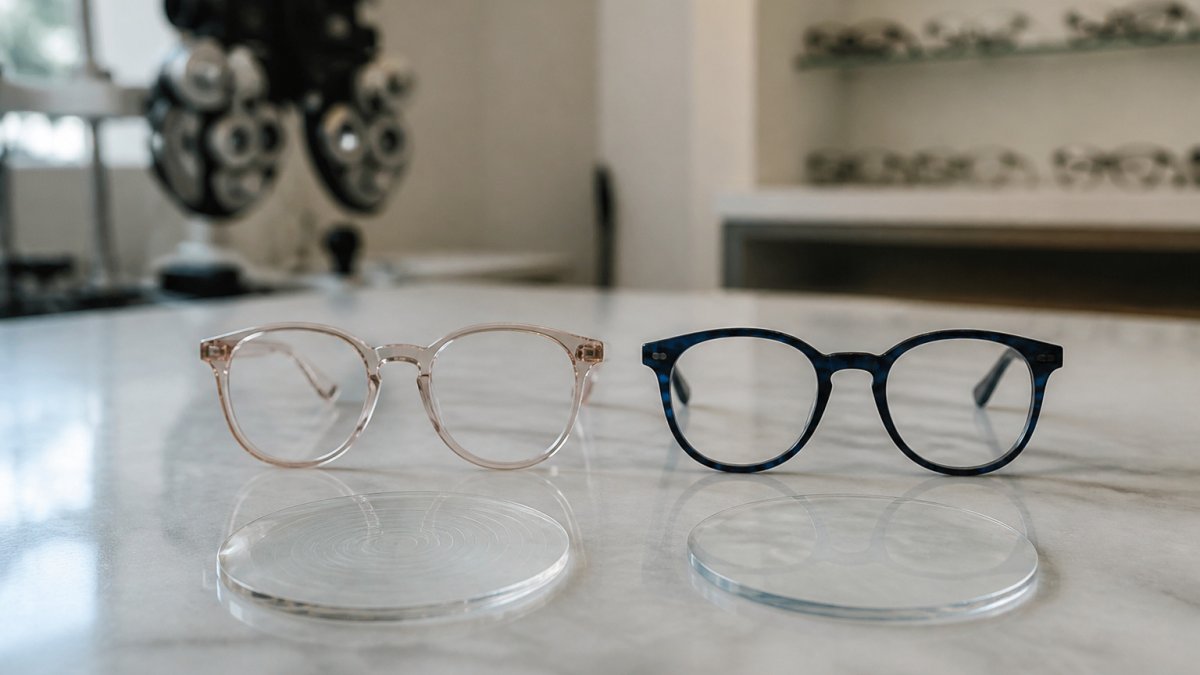
Single-vision lenses correct one distance, either near or far. But many people need more. Lens technology has evolved to address multiple vision problems in one pair of glasses.
Progressive and Bifocal Lenses
Progressive lenses offer seamless correction across all distances, far, intermediate, and near, without visible lines.
Bifocal lenses have two vision zones separated by a visible line. They're simpler and often cheaper than progressives, but the line can be cosmetically noticeable.
Single-vision lenses remain the standard for one primary vision need. They're the most affordable option and work well for younger patients or those who don't need multifocal correction.
Specialized Coatings and Add-Ons
Modern lenses can include multiple enhancements:
- Blue-light filtering reduces eye strain from screens
- Anti-reflective coating improves clarity and reduces glare
- Scratch-resistant coating extends lens life
Each coating adds cost but solves specific problems: if you spend 8+ hours daily on screens, blue-light filtering may reduce fatigue; if you're outdoors often, photochromic lenses eliminate separate sunglasses.
Alternatives to Wearing Glasses: Vision-Correction Procedures
For some people, glasses aren't the answer at all. Surgical and non-surgical procedures can permanently correct refractive errors, eliminating eyewear entirely.
LASIK, LASEK, and PRK
These laser procedures reshape the cornea to correct myopia (nearsightedness), hyperopia (farsightedness), and astigmatism.
LASEK and PRK use similar laser technology without a flap. Recovery is slower but may be safer for people with thin corneas.
Candidacy depends on corneal thickness, prescription strength, eye health, and age; most candidates must be at least 18 with a stable prescription.
Implantable Lenses and Orthokeratology
Implantable Contact Lenses (ICLs) are surgically placed inside the eye to correct refractive errors.
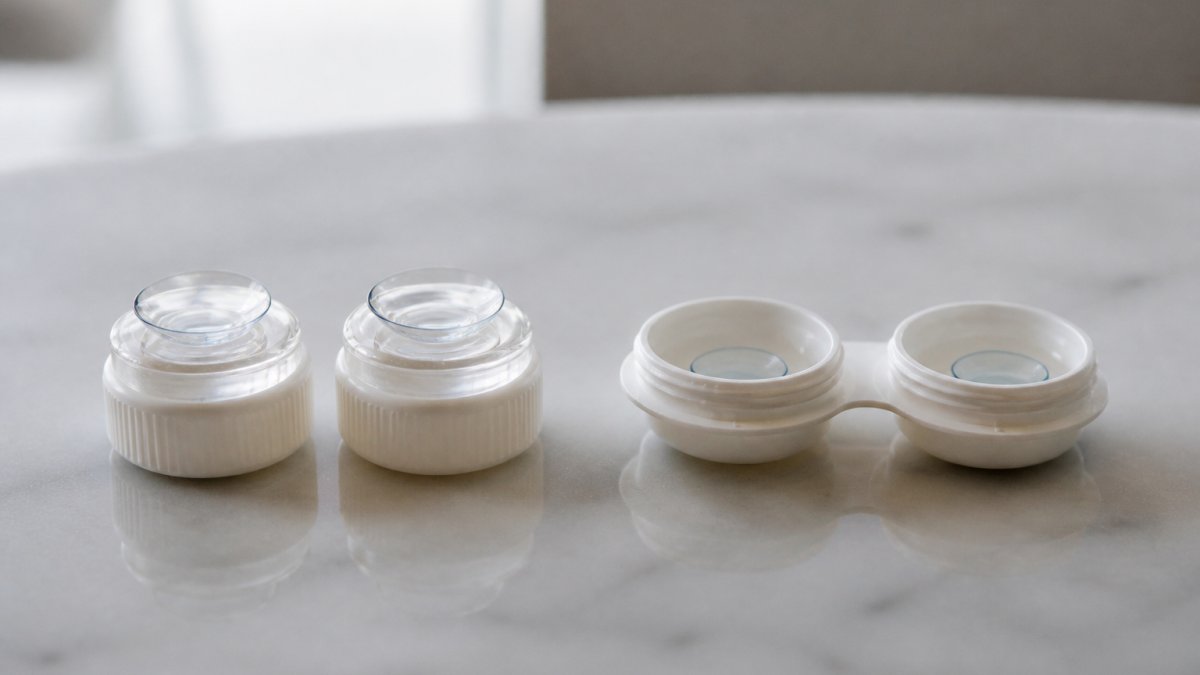
Orthokeratology uses specially designed contact lenses worn overnight to temporarily reshape the cornea.
These procedures carry risks including infection, inflammation, and vision changes. Consult a qualified ophthalmologist to understand whether you're a good candidate and what outcomes to expect.
Total Cost of Ownership: What You Really Spend
Most eyewear comparisons stop at the sticker price of the frame, which tells you almost nothing about what you'll spend over the life of a pair of glasses. Total cost of ownership means adding up every dollar from purchase through replacement.
The Cost Stack, Line by Line
Every pair of glasses is a stack of separate charges. Understanding the stack is how you compare a $95 online pair against a $400 retail pair fairly.
- Frame. The visible price, driven by materials: basic plastic and metal at the low end, acetate and stainless steel in the middle, titanium and specialty materials at the top.
- Lens type. Single-vision is the baseline; progressive and bifocal lenses add cost due to more complex surfacing and precise measurements.
- Lens material. Standard plastic is cheapest; high-index materials that keep strong prescriptions thin cost more.
How the Channels Compare on Total Spend
Rather than quoting one number, think in terms of where each channel puts its cost:
- Standard retail front-loads cost into the frame and add-ons but bundles fitting, adjustments, and warranty service: more upfront, less later.
- Online marketplaces minimize upfront cost but push measurement risk onto you. A returned or remade pair erases the savings.
- DTC brands sit in the middle: fixed, transparent pricing with limited but predictable service.
Insurance, HSA, and FSA
Vision insurance typically covers an annual or biennial eye exam and contributes a set allowance toward frames and lenses, with separate allowances for contacts.
A frequently overlooked lever: prescription glasses, contacts, and many related vision expenses are generally eligible for reimbursement through an HSA or FSA. Because those dollars are pre-tax, paying through one effectively lowers your real cost.
The Repair and Replacement Cycle
Cost of ownership is really cost per year of wear. A cheap frame that breaks in eighteen months and can't be repaired costs more per year than a durable frame lasting five years that can be relensed when your prescription changes. Durability, replacement-part availability, and relensability matter most, yet are rarely discussed at the point of sale.
A Simple Way to Decide
If your prescription is stable and simple, the lowest total cost usually comes from online or DTC. If it's complex, changes often, or you've never had a well-fitting pair, paying more upfront for professional fitting and service tends to cost less per year by avoiding remakes, returns, and frames that never quite worked.
Accessibility and Eligibility: Who Can Use Each Option
Not every alternative works for everyone. Your prescription strength, eye health, facial geometry, and budget determine which options are realistic.
Insurance coverage varies. Many vision plans cover basic eye exams and contribute toward glasses or contacts, but coverage for custom frames, premium coatings, or surgical procedures is often limited or absent.
Before committing to any option, consult an eye care professional who can assess your situation and recommend realistic paths forward.
How to Choose the Right Alternative for Your Vision Needs
Start by identifying what problems your current eyewear creates. Do frames slip constantly? Does your prescription feel incomplete? Are you spending too much on replacements?
Consider your lifestyle: outdoor workers might benefit from photochromic lenses or surgical correction, frequent readers need progressive lenses or close-distance options, and complex prescriptions or unusual face shapes likely need custom fitting.
Corner Optical can help you navigate these decisions. Our comprehensive eye exams identify your actual vision needs, our Optical Kitchen lets you design frames that fit your face precisely, and our team can explain the real trade-offs to help you choose the path that matches your life, not just your prescription.
The key is recognizing that alternatives to standard retail glasses exist for good reasons.
Frequently Asked Questions
What are the main alternatives to standard retail glasses?
Your options range from custom prescription glasses designed specifically for your face and lifestyle, to online prescription glasses retailers, specialized lens options like progressive or blue-light filtering lenses, and vision-correction procedures such as LASIK or implantable contact lenses. Each addresses different priorities: budget, style, convenience, or eliminating glasses entirely. The right choice depends on your prescription strength, lifestyle needs, face shape, and whether you prefer eyewear or surgery.
Can I buy prescription glasses online instead of from an optical store?
Yes. Online prescription glasses retailers like Zenni Optical, Warby Parker, and GlassesUSA.com allow you to upload your prescription and order frames and lenses directly. The process requires a valid prescription from an optometrist or ophthalmologist. Online shopping offers convenience and often lower prices, but you'll need to measure your pupillary distance (PD) yourself or obtain it from your eye care provider, and you won't have in-person fitting assistance if frames don't fit correctly.
Are custom prescription glasses actually better than standard retail glasses?
Custom glasses excel when standard frames don't fit well, such as narrow bridges, unusually shaped heads, or complex prescriptions. A custom approach like the Optical Kitchen allows for precise frame selection, material choices, and lens customization tailored to your daily activities and style. Standard retail glasses work fine for many people. The trade-off is typically higher cost and longer wait times.
What eyeglass lens options should I consider beyond single-vision lenses?
Progressive lenses provide seamless vision at all distances for presbyopia (age-related focusing difficulty), while bifocal or trifocal lenses offer distinct zones. Specialized coatings include blue-light filtering for screen time, anti-reflective for clarity, UV protection, and photochromic (light-reactive) lenses. High-index materials make thick prescriptions thinner and lighter. Your optometrist can recommend which options match your prescription strength, work environment, and daily activities.
Are vision-correction procedures like LASIK a realistic alternative to wearing glasses?
LASIK, LASEK, PRK, and other refractive procedures can reduce or eliminate the need for glasses by reshaping the cornea. Candidacy depends on prescription strength, corneal thickness, overall eye health, and age. Procedures are not reversible and carry risks including dry eye and night vision issues. Results vary; some people still need glasses or contacts afterward. Implantable contact lenses and orthokeratology (overnight lens reshaping) offer alternatives for those ineligible for laser surgery. Consult an eye care specialist to determine if you're a candidate.
The right eyewear should enhance your life, not complicate it. Whether you need custom-fitted frames that actually stay on your face, advanced lenses that reduce eye strain, or a completely different approach to vision correction, you have options. At Corner Optical, we help patients find solutions tailored to their individual vision, lifestyle, and style preferences. Schedule an appointment to discuss which alternative works best for you.