 comparison
Are Myopia Control Lenses Worth the Cost for Kids?
Last Updated: November 1, 2026
Quick Summary
Myopia control lenses can be worth it for children whose prescription is changing each year, because they are designed to slow eye growth rather than only correct blur. They are not a cure, and the total cost over the full treatment period should be compared before deciding.
- Myopia control lenses aim to slow nearsightedness progression, not just correct blurry vision.
- Specialty designs usually cost more than single-vision lenses, and follow-up exams add to the total.
- Ask for a written quote covering the full treatment plan, not only the first purchase.
- Trial results are group averages over defined periods, not guarantees for your child.
- A child whose prescription keeps climbing each year has more to gain from early management.
Table of Contents
- What Myopia Control Lenses Are and How They Work
- Myopia Control Lenses vs Regular Glasses: What Changes
- Myopia Control Contact Lenses for Kids: Daily Disposables and Ortho-K
- Stellest Lenses for Children: Features, Evidence and Fit
- Myopia Management Cost: Total Spending Over Time
- How Strong Is the Evidence and What Are the Limits
- Deciding Whether It Is Worth It for Your Child and Scheduling a Consultation at Corner Optical
- Frequently Asked Questions
What Myopia Control Lenses Are and How They Work
Myopia control lenses are specialty lenses designed to slow the progression of nearsightedness in children, not just correct blurry distance vision (Myopia Control in Children). A qualified eye-care professional can explain which option fits a particular child's eyes, which is where the decision should start. Compare myopia management options for kids and teens and begin with an exam.
Nearsightedness, or myopia, happens when the eye grows slightly too long, so distant objects focus in front of the retina (Nearsightedness (Myopia)). Each year a child's prescription often gets stronger because the eye keeps elongating. That ongoing growth is what myopia control aims to slow.
Most myopia control designs fall into a few families:
- Spectacle lenses worn as glasses
- Soft contact lenses worn during the day
- Orthokeratology (ortho-K) lenses worn overnight to temporarily reshape the cornea
Each approach uses a different mechanism, and none of them stops myopia entirely. The evidence for slowing progression is strongest for specific designs, so families should ask which product was studied and how that study measured results.
Myopia Control Lenses vs Regular Glasses: What Changes
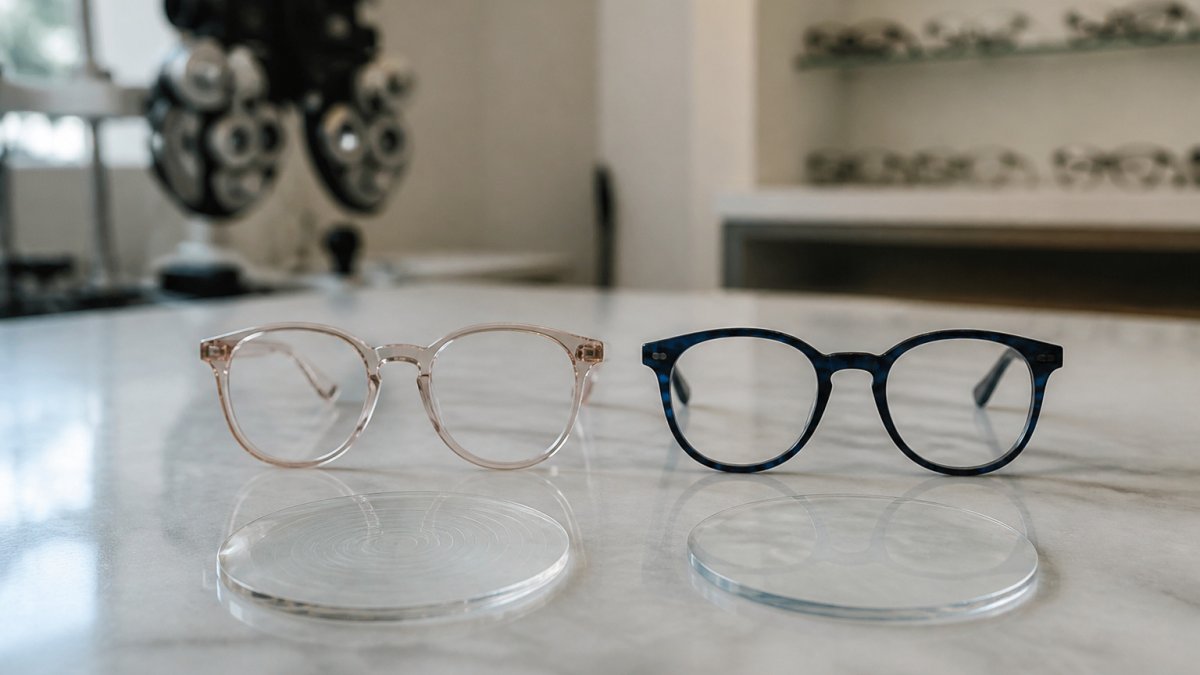
Standard single-vision glasses correct the prescription and nothing more. They help a child see clearly at the moment, but they do not try to influence how fast the eye grows. Myopia control spectacles add a lens design intended to reduce that growth signal while still providing clear vision.
The practical differences come down to three questions:
- Does it aim to slow progression? Standard glasses do not. Myopia control designs do, though the degree of benefit varies.
- How much does it cost? Specialty designs usually cost more than single-vision lenses, and the price gap often matters most for families weighing options.
- How does it fit daily life? Glasses require no handling, while contact lenses need insertion, removal, and care.
Many parents choose a myopia control lens only after a child's prescription has moved noticeably from one exam to the next. Keeping regular follow-up exams helps track whether the chosen approach is working.
Myopia Control Contact Lenses for Kids: Daily Disposables and Ortho-K
Contact-based options fall into two main groups: daily disposable soft lenses and overnight orthokeratology. They suit different children and different routines.
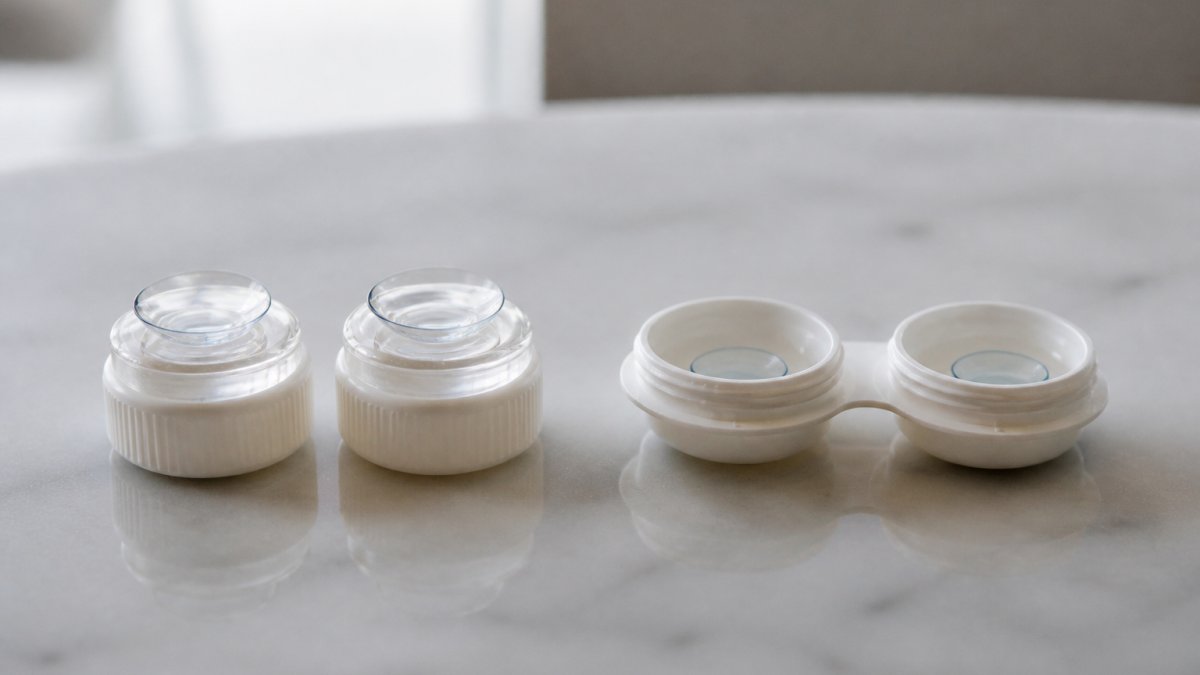
Daily disposable myopia control lenses are worn during the day and thrown away at night. Because each pair is new, there is no buildup of deposits and no cleaning routine.
Orthokeratology (ortho-K) uses rigid lenses worn while sleeping. Ortho-K requires careful hygiene and regular follow-up, and it is not appropriate for every child. Find personalized contact lens fittings in Glenview to see which lens types are available locally.
A common mistake is choosing the option with the lowest upfront fee without considering how consistently a child can wear and care for the lenses.
Stellest Lenses for Children: Features, Evidence and Fit
Families should look at the study behind any product. Clinical trials of myopia control designs often report reduced progression and eye elongation over a defined period, but a single trial does not guarantee the same result for every child, and results vary with age, starting prescription, and how consistently glasses are worn.
Fit matters as much as design. Children need frames that sit correctly and lenses that match their prescription and visual habits. Whether a given lens design is right for a child is a clinical decision that an eye-care professional must assess.
Myopia Management Cost: Total Spending Over Time
A simple statement that specialty lenses cost more is not enough to answer whether myopia control is worth it.

A useful way to model spending is to separate one-time costs from recurring costs, then multiply by the expected treatment horizon.
One-time or periodic costs
- Specialty fitting or evaluation visit. Myopia-control fittings take longer than a standard exam because the clinician measures progression, discusses options, and trains the child on handling. Expect this to be billed separately from a routine eye exam in many practices.
- Initial lens or frame purchase. Specialty spectacle lenses are typically priced above single-vision lenses, and the frame is often a separate line item.
- Ortho-K initial lens set. Orthokeratology involves a custom lens pair plus fitting visits, and the upfront cost is usually the highest of the options.
Recurring costs
- Daily disposable soft lenses. These are replaced every day, so the monthly cost is predictable but continuous. A child wearing daily disposable lenses will go through one pair per day of wear, so the annual count depends on how many days the lenses are worn.
- Ortho-K replacement and care. Lenses are typically replaced on a schedule set by the prescriber, and solution and case supplies are ongoing.
- Follow-up exams. Monitoring visits are the cost most families underestimate. These are how the clinician confirms whether progression is actually slowing, and they are not optional if the family wants to know whether the money is working.
- Replacement for loss or damage. Children lose and break things. Budget for at least occasional replacement of glasses or lenses.
Insurance and spending accounts
Coverage for myopia control varies widely.
A simple total-cost worksheet
- Get the written quote for the initial fitting and first product purchase.
- Add the annual cost of replacement lenses or supplies.
- Multiply follow-up visit cost by the number of monitoring visits per year.
- Multiply the annual total by the expected treatment years.
- Subtract any insurance or spending-account reimbursement.
That final number, not the first invoice, is the figure to compare across options.
The article breaks the total cost of myopia management into one-time and recurring items, which can be scanned side by side.
| Cost item | Type | What to know |
|---|---|---|
| Specialty fitting or evaluation visit | One-time | Billed separately from a routine exam |
| Initial lens or frame purchase | One-time | Specialty lenses priced above single-vision |
| Ortho-K initial lens set | One-time | Usually the highest upfront cost |
| Daily disposable soft lenses | Recurring | Replaced every day of wear |
| Ortho-K replacement and care | Recurring | Replacement on prescriber's schedule |
| Follow-up exams | Recurring | Confirm whether progression is slowing |
| Replacement for loss or damage | Recurring | Budget for occasional replacement |
How Strong Is the Evidence and What Are the Limits
A headline percentage without context is not useful for a family decision.
What the studies actually measure
Myopia-control trials typically report one or more of the following:
- Spherical equivalent refraction change, which is the change in prescription strength over time, usually in diopters.
- Axial length change, which is the physical elongation of the eye, measured in millimeters. This matters because eye growth is the underlying driver of myopia progression.
- Percentage reduction versus a control group, which compares the treated group's progression to a comparison group wearing standard single-vision correction.
A trial that reports a 50% reduction in progression over two years is saying the treated group progressed about half as much as the control group over that period. It is not saying the child's myopia stopped, reversed, or was cured. That distinction is the single most important thing for parents to understand.
Study duration and participant ages
Most published myopia-control trials run two to three years, and many enroll children roughly in the 6-to-13 age range, when progression tends to be fastest. That design is reasonable, but it means the evidence base is strongest for that window. Fewer trials follow children into the late teens, and long-term data on outcomes decades later are limited. A family should treat a two-year result as evidence that the treatment slows progression during treatment, not as a guarantee about the child's final prescription at adulthood.
Why results vary between children
Even within a trial, individual responses differ. Starting age, baseline prescription, how fast the child was progressing before treatment, and how consistently the treatment is worn all influence outcomes.
What the evidence does not support
- It does not support claims that any lens cures myopia or eliminates the need for glasses later.
- It does not support assuming one product's trial result transfers to a different product with a different design.
- It does not support skipping routine eye-health exams, which check for problems unrelated to prescription change.
Stopping treatment and rebound
Some evidence suggests that when certain myopia-control treatments are stopped, progression can resume, and in some cases there may be a period of faster catch-up growth.
Families should treat any claim of a specific reduction with some caution and ask which study supports it, how long it ran, and who was included. The strongest position is not "this works" or "this does not work," but "this design has trial evidence for slowing progression over a defined period in children of a certain age, and we will monitor your child to see whether it is working for them."
Deciding Whether It Is Worth It for Your Child and Scheduling a Consultation at Corner Optical
Whether myopia control is worth the cost depends on how quickly your child's prescription is changing, how comfortable your child is with the option, and how much ongoing spending your family can sustain.
A practical way to decide:
- Ask for your child's current prescription and the change since the last exam.
- Compare the total cost over the expected treatment period, not just the first purchase.
- Consider whether your child will reliably wear and care for the chosen option.
- Ask which specific product has evidence for your child's situation.
Corner Optical's team can measure your child's progression, explain the options that fit their eyes, and give you a full cost picture before you commit. Start by booking an eye exam with Corner Optical to track prescription changes and discuss which approaches may be available for your child.
Frequently Asked Questions
What do myopia control lenses do?
Myopia control lenses are designed to correct a child's nearsightedness while also aiming to slow how quickly the eye grows longer, which is the main driver of myopia progression. They can be spectacle lenses or contact lenses, including daily disposables and overnight orthokeratology lenses. Clinical studies report reduced progression compared with standard single-vision lenses, but results vary by child. Whether a specific lens suits your child depends on a professional eye exam and measurements taken over time.
Are myopia control lenses better than regular glasses for kids?
Regular single-vision glasses correct focus but do not target the progression of myopia. Myopia control lenses correct vision and add a design intended to slow eye elongation, so they may be a better fit for children whose prescription is increasing each year. The advantage is measured in slowed progression rather than sharper vision, and the difference depends on the child, the lens, and consistent wear. An eye-care professional can compare options for your child's specific prescription.
Are myopia control lenses safe for children?
Myopia control spectacle lenses carry few risks because they are worn like ordinary glasses. Contact lenses, including overnight orthokeratology, require fitting, hygiene and follow-up visits to reduce the risk of eye infection or irritation. No treatment is risk-free, so families should ask about potential side effects and how they will be monitored. Regular follow-up exams help the eye-care team confirm that the lenses are fitting and performing as expected.
How often should a child have eye exams while using myopia control lenses?
Children using myopia control lenses usually need follow-up exams more often than a standard routine check, so the eye-care team can measure how the eye is changing and confirm the lenses still fit well. The schedule is set by the eye-care professional based on the child's age, prescription, lens type and progression. Keeping these appointments is part of the treatment, since the benefit depends on ongoing monitoring. Ask Corner Optical for a recommended schedule for your child.