 blog
Custom Eyewear for Your Style and Prescription Needs
Table of Contents
- Why Custom Eyewear Matters for Your Vision and Style
- How a Comprehensive Eye Exam Guides Your Prescription Eyewear
- Choosing Eyeglass Frames That Fit Your Face and Lifestyle
- Custom Prescription Glasses: Lens Options and Treatments That Protect Your Eyes
- Eyewear Fit and Comfort: The Foundation of All-Day Vision
- What to Expect From Your Custom Eyewear Process
- Preventative Eye Health Beyond Your Frames
- Frequently Asked Questions
Last Updated: October 18, 2026
Why Custom Eyewear Matters for Your Vision and Style
Custom eyewear prescription solutions go far beyond a simple pair of glasses, they're a partnership between your vision needs, lifestyle, and personal style, affecting how clearly you see the world every day.
Most people treat eyewear as a commodity: pick frames that look decent and hope the custom eyewear prescription works. The right custom eyewear can prevent eye strain, reduce headaches, and slow the progression of certain vision problems. The right fit and prescription combination transforms how people experience their vision.
Custom eyewear is built around YOUR eyes, not a generic standard. Your prescription, facial proportions, and lifestyle demands are unique, so why settle for frames designed for someone else?
How a Comprehensive Eye Exam Guides Your Prescription Eyewear
A comprehensive eye exam is the foundation of everything that follows, a diagnostic process, not just reading letters on a chart, that reveals what your eyes need to perform optimally.
Your optometrist measures visual acuity, checks eye pressure, evaluates how your eyes work together, and screens for diseases like glaucoma and macular degeneration.
The American Academy of Ophthalmology's guidelines on comprehensive eye exams recommend that adults get a baseline exam every one to two years, with more frequent exams as you age or if you have existing eye conditions.
Choosing Eyeglass Frames That Fit Your Face and Lifestyle
Frame selection is where personal style meets functional necessity. The wrong frame undermines even a perfect prescription; the right one becomes invisible because it fits so naturally.
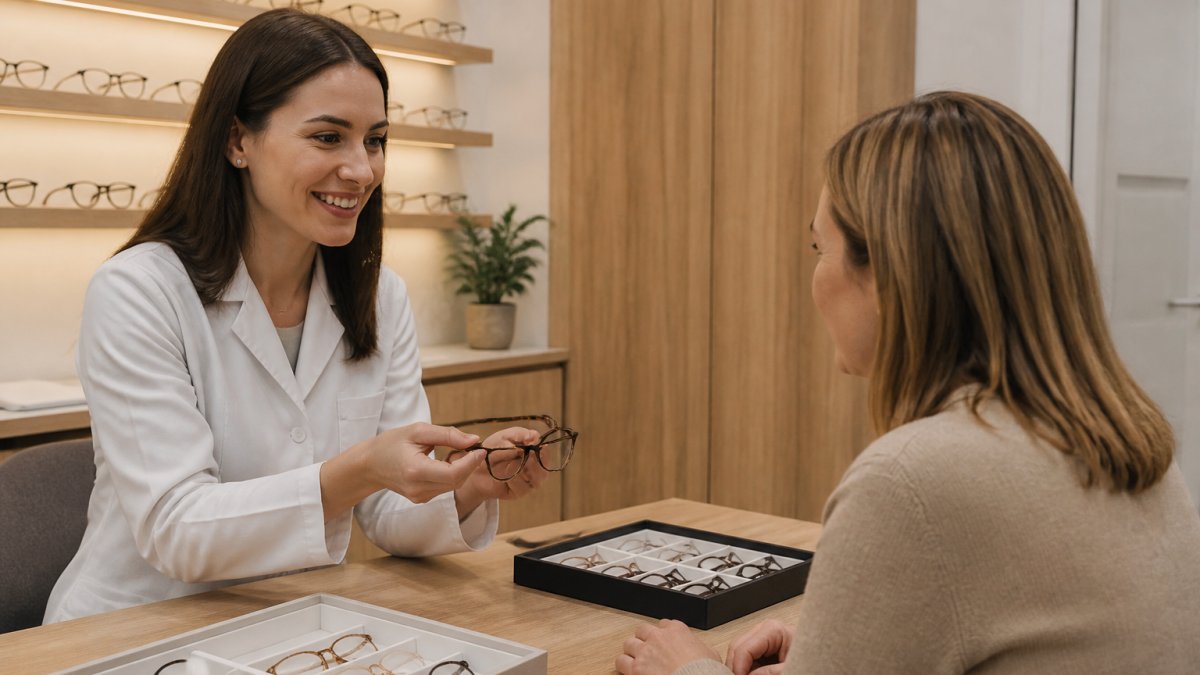
This is where Corner Optical's approach differs. Our curated collection of renowned and independent eyewear brands gives you options that go beyond the typical mass-market frames.
Custom Prescription Glasses: Lens Options and Treatments That Protect Your Eyes
Once frames are selected, lens technology is your next critical decision, where preventative eye health begins. Rather than an undifferentiated menu, compare options by use case, benefit, limitation, and maintenance so you can choose deliberately.
Start With Your Prescription, Not the Add-Ons
Lens selection should follow from your prescription strength and pupillary distance, not whatever upgrade is being promoted. Higher prescriptions need higher-index materials to stay thin and light; lower prescriptions often do better in standard materials. Ask your optician to show the trade-off in numbers, center thickness, edge thickness, and weight, before you commit.
Compare Lens Materials by Use Case
- Standard plastic (CR-39): Affordable and optically clear, but thicker and less impact-resistant. A reasonable choice for lower prescriptions in dress frames.
- Polycarbonate: Impact-resistant and naturally UV-blocking, which is why it is common in children's eyewear and safety-oriented frames. Its optical clarity is slightly lower than standard plastic, which matters at higher prescriptions.
- Trivex: Balances good optics with impact resistance and is lighter than polycarbonate, making it a strong option for active adults and drilled-rim frames.
- High-index: Thinner and lighter at strong prescriptions, but costs more and can show more chromatic aberration. Best reserved for prescriptions that actually need it.
- Glass: Superior scratch resistance and optical clarity, but heavier and more fragile. Rarely the practical choice for all-day wear.
Compare Coatings by Benefit and Limitation
- Anti-reflective coating: Reduces glare and improves night driving and screen comfort. Limitation: older coatings smudge easily and need careful cleaning; newer coatings are more durable but still benefit from microfiber cleaning and a case.
- UV protection: Non-negotiable. Unprotected UV exposure contributes to cataracts and macular degeneration over time (New Research Sheds Light on How UV Rays May Contribute to Cataract). Most modern lens materials block UV, but confirm it in writing.
- Blue light filtering: May reduce perceived strain from long screen sessions, but the evidence for preventing retinal damage is mixed. Treat it as a comfort feature, not a medical guarantee.
- Scratch-resistant and hydrophobic coatings: Extend lens life and make cleaning easier. They are not scratch-proof, so maintenance habits still matter.
- Photochromic lenses: Darken outdoors and clear indoors, useful for people who move between environments. Limitation: they may not darken fully behind a car windshield.
Specialty Lenses by Lifestyle
- Progressive lenses: Correct multiple distances in one lens. Adaptation takes days to weeks for many wearers, and frame height matters, a too-short frame can cut off the reading zone.
- Computer or office lenses: Optimize intermediate and near vision for desk work. They are not a substitute for distance correction while driving.
- Sports and safety lenses: Prioritize impact resistance and retention. Polycarbonate or Trivex with a wrap design is a common pattern.
Maintenance and Replacement
Lens life depends on material and coating. A common pattern is that anti-reflective coatings last one to three years with careful cleaning, while uncoated lenses scratch sooner. Clean with a microfiber cloth and lens spray, avoid paper towels and hot water, and store frames in a case. When coatings start to craze or scratch, replacement is usually more cost-effective than living with reduced clarity.
Your optometrist helps you navigate these trade-offs based on prescription strength and lifestyle, but the final choice should be yours, made with clear comparisons rather than a single recommended upgrade.
Eyewear Fit and Comfort: The Foundation of All-Day Vision
A perfectly prescribed lens in an uncomfortable frame is worse than no correction at all, people simply won't wear it.
All-day wearability depends on weight, balance, and pressure distribution. A heavy frame creates pressure points on your nose and temples; an unbalanced one causes constant micro-adjustments and headaches; uneven pressure creates hotspots that become painful after a few hours.
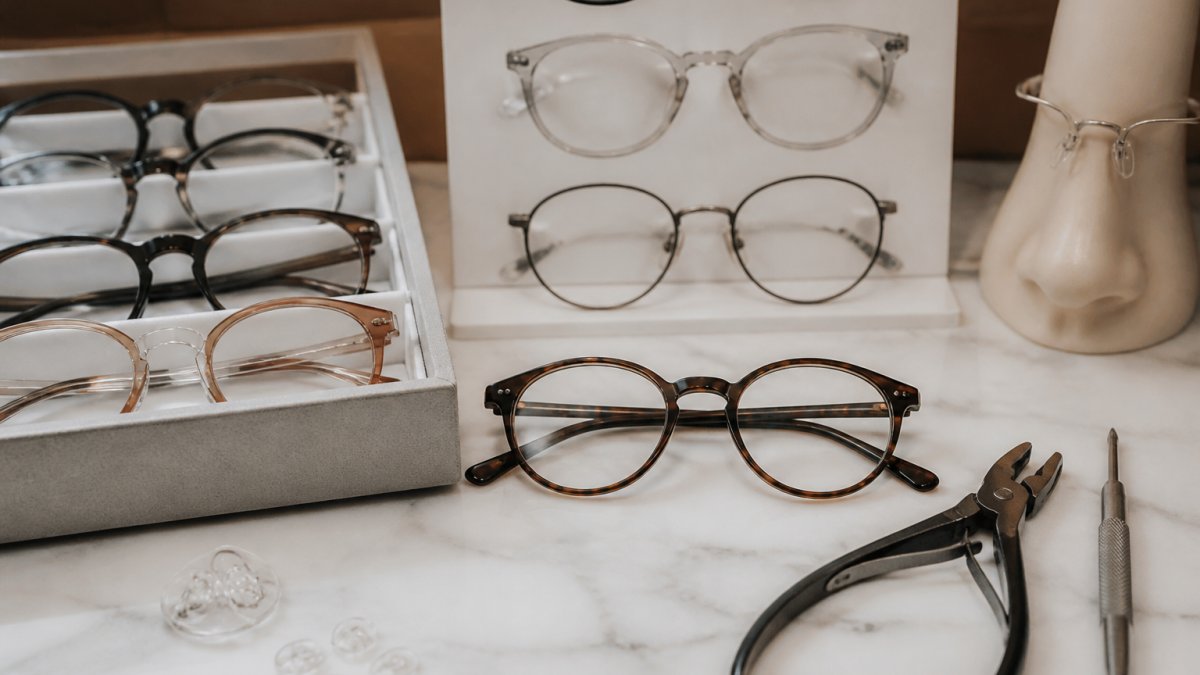
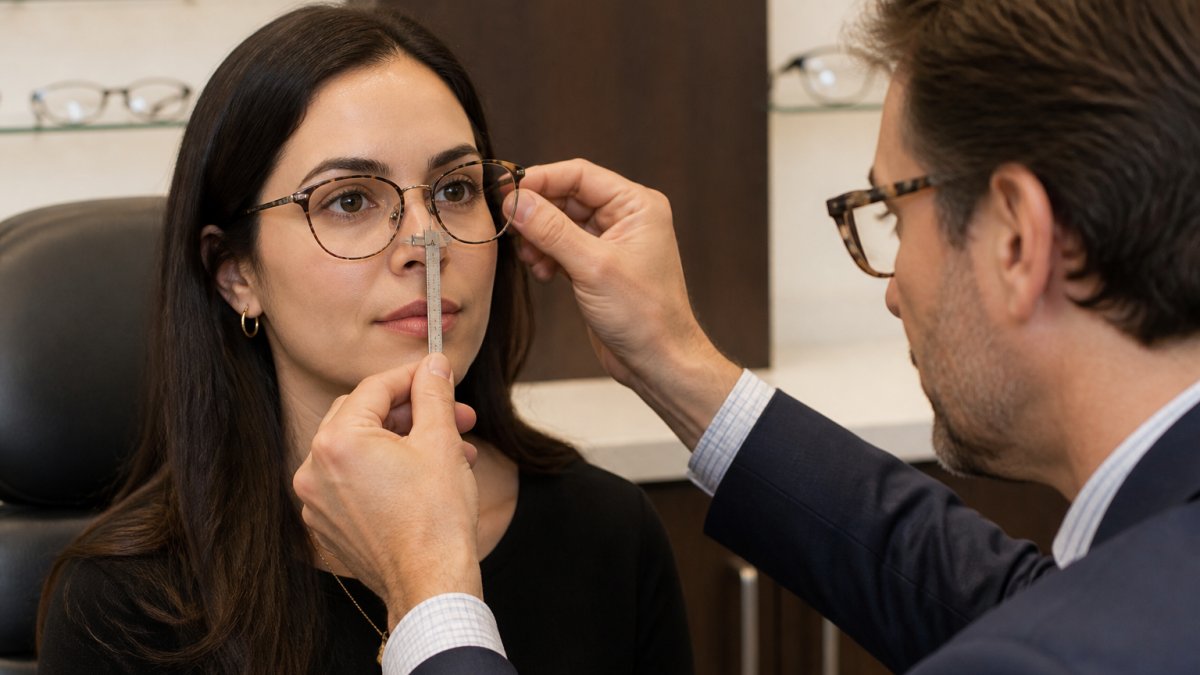
Custom fit is essential: your optometrist positions the nose pads to support your bridge without pinching, adjusts the temples to sit comfortably behind your ears without pulling, and sets the frame angle so your eyes align with the optical centers of your lenses.
Frame adjustments are part of the service.
What to Expect From Your Custom Eyewear Process
The journey from prescription to finished eyewear unfolds in distinct phases. Understanding them removes surprises, helps you make better decisions, and lets you verify that what you ordered is what you received.
Phase 1: The Comprehensive Eye Exam
Your optometrist gathers diagnostic information, visual acuity, eye pressure, how your eyes work together, and screening for conditions like glaucoma and macular degeneration. Ask for your pupillary distance and other lens-alignment measurements; you're entitled to a copy of your prescription, and the numbers help you compare options.
Phase 2: Frame Selection and Measurement
Beyond trying frames on, ask for the measurements that determine comfort: frame width at the temples, bridge width, temple length, and lens height. A too-tall frame forces head movement to find the optical center; a too-short one can cut off a progressive lens's reading zone. Your optician should record these so the lab can align the lenses to your eyes.
Phase 3: Lens Ordering and Verification
Once frames are selected, your prescription goes to the lab. Before ordering, confirm in writing:
- The exact lens material and index
- Coatings included and their warranties
- Whether the lenses will be edged to the frame or cut from stock
- The expected turnaround time
When the glasses arrive, verify the prescription against your exam record. Many optical shops will check the finished lenses with a lensmeter on request. If the prescription or alignment is off, ask for a remake before accepting the glasses.
Phase 4: Fitting, Adaptation, and Aftercare
Your optician adjusts the frame so the nose pads support your bridge without pinching, the temples sit comfortably behind your ears, and the frame angle aligns your eyes with the optical centers. Progressive and specialty lens wearers should expect an adaptation period; if discomfort persists beyond a couple of weeks, return for a professional review rather than living with it.
Ask about the warranty before you leave. Policies vary, but common coverage includes frame defects, coating failures, and adjustments. Keep your receipt and prescription record.
Pricing and Insurance Considerations
Costs are driven by frame material, lens index, coatings, and specialty designs. Ask for an itemized quote so you can see what each upgrade adds. If you have vision insurance, confirm which frames and lens options are covered and whether the lab is in-network; out-of-network reimbursement is often lower. Flexible spending and health savings accounts may cover prescription eyewear, so check your plan rules before ordering.
Questions to Ask Before You Order
- What is the total price, itemized by frame, lens, and coating?
- What is the warranty on frames and coatings?
- How long will the order take, and what happens if it is late?
- What is the policy for adjustments and remakes?
- Will you verify the finished prescription with a lensmeter?
Finally, you return for frame fitting and adjustment. Your optician ensures the frame sits correctly on your face, the lenses align with your eyes, and everything feels comfortable. This is also when you receive instruction on lens care and adjustment techniques. Understanding this process, and the verification and aftercare steps, turns a purchase into a managed outcome.
Preventative Eye Health Beyond Your Frames
Your custom eyewear is one tool in a larger preventative eye health strategy, frames and lenses protect against strain and UV damage, but other factors matter too.
Regular comprehensive eye exams catch problems early. Many serious conditions like glaucoma develop without symptoms, and early detection can prevent vision loss.
Daily habits matter too. If you spend hours at a computer, the 20-20-20 rule helps: every 20 minutes, look at something 20 feet away for 20 seconds.
The National Eye Institute's resources on eye health and disease prevention provides evidence-based guidance on maintaining vision throughout your life.
Clear vision shouldn't require compromise between function and style.
Frequently Asked Questions
What makes prescription eyewear custom?
Custom prescription eyewear is tailored to your exact vision prescription, facial proportions, and lifestyle needs. Unlike mass-produced frames, custom eyewear accounts for your pupillary distance, bridge width, face shape, and the specific lens treatments you need. This personalization ensures both clear vision and comfort throughout your day, whether you work at a desk, spend time outdoors, or need multifocal lenses for presbyopia.
How do I choose eyeglass frames that suit my face and personal style?
Start by identifying your face shape and considering which frame styles complement it. Rectangular faces often suit rounded frames, while round faces benefit from angular designs. Consider your lifestyle: active individuals may prefer lightweight, durable materials, while professionals might choose classic designs. Work with your optical team to find frames that match both your aesthetic preferences and functional needs, ensuring they sit properly on your nose and ears for all-day wear.
How often should I have my prescription checked?
Most adults should have a comprehensive eye exam every one to two years, though this varies based on age, health conditions, and prescription stability. Adults over 40 should have annual exams to screen for presbyopia and age-related conditions like glaucoma. Children and those with chronic eye conditions like dry eye may need more frequent visits. Regular exams catch prescription changes early and monitor your eye health for preventative care.
What should I ask an optician when ordering custom prescription glasses?
Ask about lens materials and coatings that match your lifestyle, such as blue-light filtering for screen time or UV protection for outdoor work. Discuss frame fit and adjustment options to ensure comfort. Request information about the prescription-to-frame selection process and any aftercare adjustments included. Ask whether your insurance covers the frames and lenses, and clarify the timeline for completion. Understanding these details helps you make informed decisions about your custom eyewear.