 blog
How to Prepare Your Child for a Myopia Exam in 7 Steps
Last Updated: November 2, 2026
Quick Summary
A myopia exam checks how your child's eyes are changing over time, not just their current glasses prescription. It measures the prescription, how it has shifted since the last visit, and eye growth where equipment allows, to guide whether management makes sense. Preparing a short list of symptoms, glasses, medicines and family history helps the visit go smoothly.
- A myopia exam tracks how fast nearsightedness is changing, not just the current prescription.
- Nearsightedness happens when the eye grows a little too long, so distant objects look blurry.
- Bring current glasses, any prior prescription, medicine list, and notes on symptoms and family history.
- Dilating drops can blur near vision and cause light sensitivity for several hours afterward.
- Ask for the actual measurements and the next visit date so you can see the trend over time.
Table of Contents
- Why a Myopia Exam Is Different From a Routine Eye Exam
- Step 1: Schedule the Exam at a Comfortable Time
- Step 2: Explain the Exam in Child-Friendly Language
- What to Bring to a Child's Eye Exam
- How a Myopia Test Is Done
- Steps 3 to 6: Prepare Clothing, Glasses, Questions and Calm Routines
- How to Slow Myopia Progression in Children
- Step 7: Plan Your Follow-Up Visits and Next Steps With Corner Optical
- Frequently Asked Questions
Why a Myopia Exam Is Different From a Routine Eye Exam
A myopia exam is a closer look at how your child's eyes are changing over time, not just a check for a new glasses prescription. A myopia exam is often treated as the first step in a plan to watch and manage nearsightedness. A routine exam tells you how well your child sees today. A myopia exam also asks how fast the eyes are growing and what might be driving that change.
The American Academy of Ophthalmology explains that myopia, or nearsightedness, happens when the eye grows a little too long, so distant objects look blurry (Nearsightedness: What Is Myopia?). American Academy of Ophthalmology guidance on myopia
Because myopia can keep getting worse through the school years, the visit usually includes:
- Measuring the current prescription and how it has changed since the last visit
- Checking eye length or other growth signs when the clinic has the equipment
- Reviewing family history and screen, reading and outdoor habits
- Discussing whether management options make sense for your child
Ask your eye care provider what to expect and whether your child may benefit from myopia management.
Step 1: Schedule the Exam at a Comfortable Time
Pick a time when your child is rested, fed and not rushed. Many families choose a slot that does not fall right after school or a sports practice. A calm start makes the testing easier to complete.
Tips for booking:
- Ask for a time that avoids a missed class or a hungry, tired afternoon
- Book with enough room to arrive early and settle in
- Note any upcoming vision or school screening so you can share the results
Watch out: a child who is sleepy or hungry may struggle to focus on the close-up tasks, so a rushed slot can lead to less reliable results.
Step 2: Explain the Exam in Child-Friendly Language
Talk through the visit a few days ahead. Keep the words simple and the tone upbeat.
Good phrases to use:
- "The doctor will look at your eyes with some lights and lenses."
- "You will read letters or pictures on a wall."
- "There are no wrong answers. We just want to see how your eyes work."
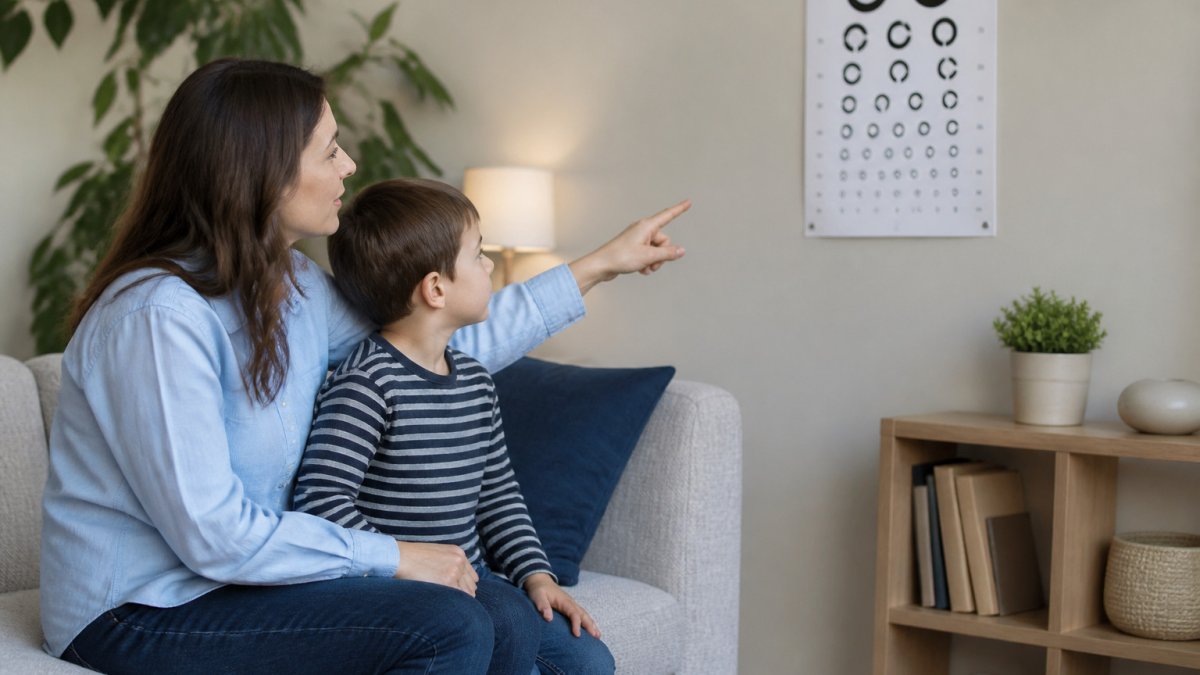
Avoid promising that the exam will not feel strange. Instead, say it is quick and that you will be right there the whole time.
What to Bring to a Child's Eye Exam
A myopia exam runs on history as much as on the eye chart. The more context you hand the clinician at the start, the less time is spent reconstructing it and the more time is left for testing and questions.
Vision aids and prior prescriptions
- Current glasses, in their case, even if your child mostly wears them at school
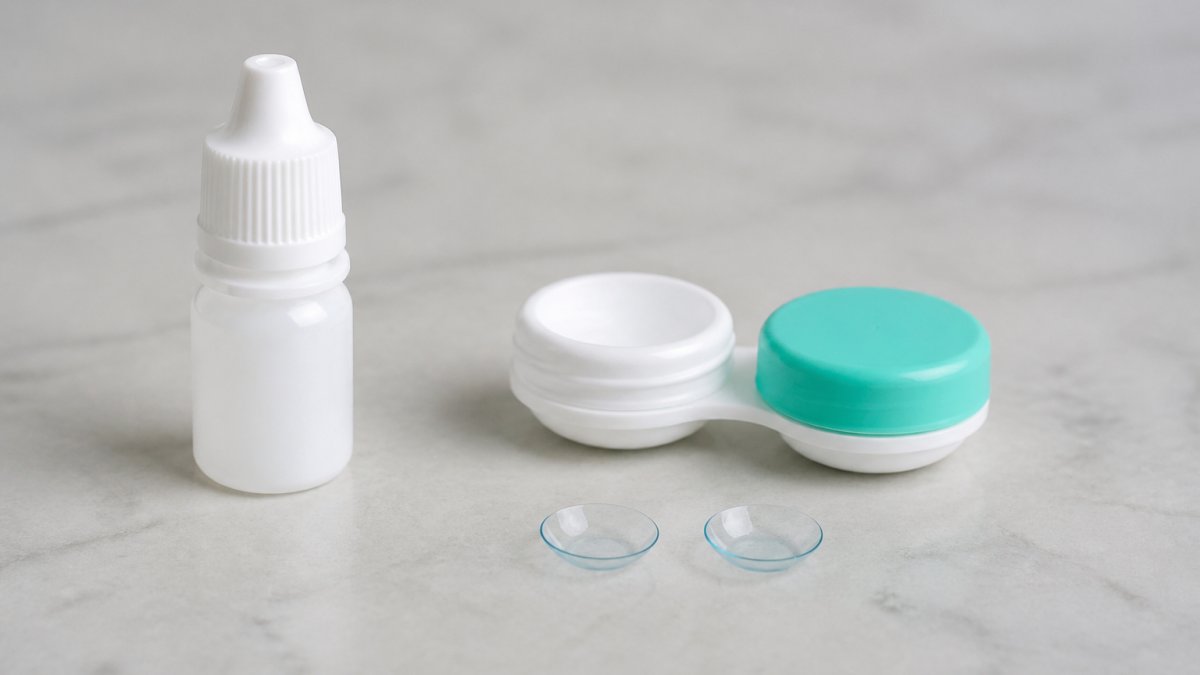
- Contact lenses only if the doctor has asked for them, plus the lens case and solution
- Any previous prescription, even an old one, so the clinician can see how the numbers have moved
- A copy of the last exam summary or care plan, if you have one
Health and medication history
- A list of medicines, vitamins and supplements, including allergy drops
- Known allergies, especially to eye drops
- Any eye injury, infection or surgery, however minor
- Diagnoses that can affect vision or attention, such as ADHD or a sensory processing difference
Symptoms and observations
- Notes on squinting, head tilting, eye rubbing, headaches or trouble copying from the board
- How close your child holds a book, tablet or phone
- Whether teachers or coaches have mentioned anything about vision
- Any recent school vision screening result, in writing if possible
Family history
- Nearsightedness in parents or siblings, and the age it started
- Any history of high myopia, retinal problems or eye disease in the family
Logistics
- Insurance card and any referral or authorization the plan requires
- A form of payment for anything not covered
- A comfort item and a snack, especially for younger children
Writing this down before the visit matters more than it sounds. Parents routinely forget the one detail that would have changed the conversation, usually a symptom that started weeks ago or a grandparent's history of strong glasses. A short note on your phone is enough.
The American Optometric Association also describes how families can prepare for a child's eye visit. American Optometric Association guidance on children's eye exams
Watch out: do not bring contact lenses for a child who has never been fitted or trained in them. Inserting or removing lenses in the office without prior instruction can irritate the eye and disrupt the measurements the doctor is trying to take.
How a Myopia Test Is Done
A myopia exam is not one test.
Screening versus comprehensive exam
A school or pediatrician screening typically checks distance acuity with a chart and refers out if something looks off. It cannot measure refractive error precisely, cannot assess eye length, and cannot track change over time.
The typical sequence
- History and symptoms. The clinician asks about glasses use, screen and reading habits, time outdoors, headaches and family history before any testing begins.
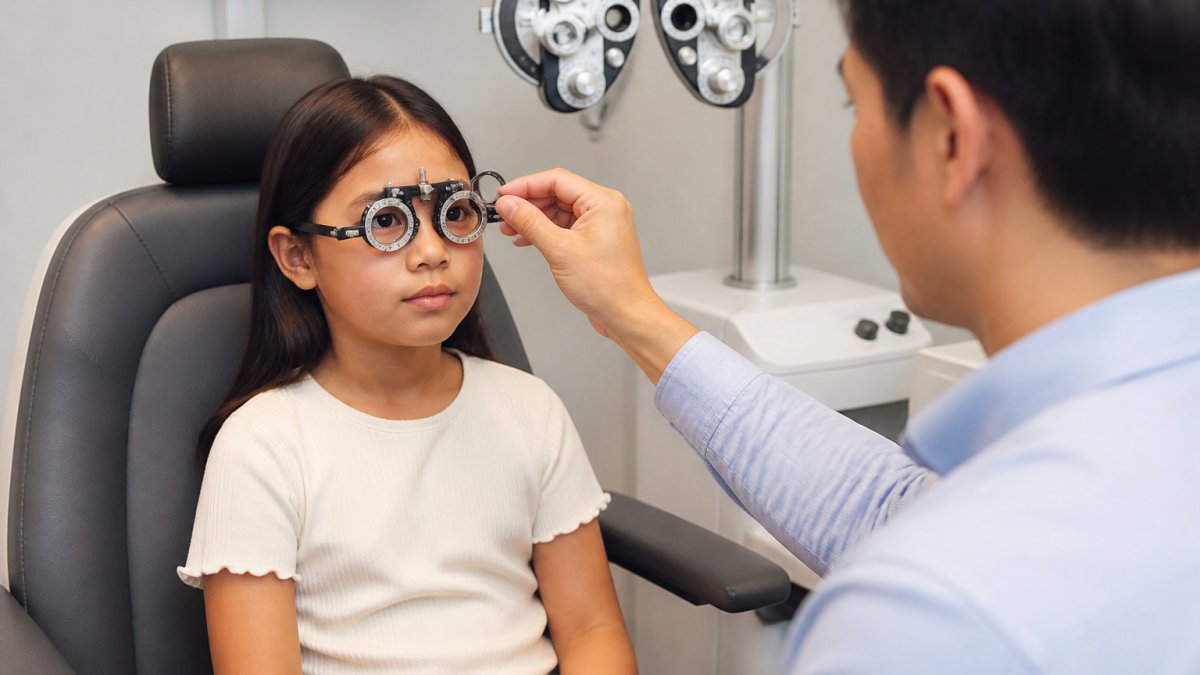
- Visual acuity. Your child reads letters or matching pictures at a set distance, one eye at a time. Age-appropriate charts are used for children who do not yet know letters.
- Refraction. Lenses are swapped in front of the eye, or an automated instrument estimates the prescription, to pin down the refractive error. This is the number that shows how nearsighted your child is.
- Cycloplegic refraction, when indicated. Dilating drops relax the eye's focusing muscle so the clinician can measure the true prescription rather than one inflated by accommodation, which is common in children. This is often recommended in a myopia exam because it gives a cleaner baseline for tracking progression.
- Eye health checks. The clinician examines the front of the eye and, after dilation, the retina and optic nerve at the back.
- Eye growth measurement, when equipment is available. Some clinics use optical biometry or similar instruments to measure axial length, the front-to-back dimension of the eye. A growing eye is the mechanism behind progressing myopia, so this measurement is the most direct way to track whether management is working.
What the parent will notice
Expect a visit that runs longer than a routine check, largely because of dilation. If drops are used, your child's near vision will be blurry and their eyes will be light-sensitive for several hours.
Why the numbers are tracked, not just recorded
A single prescription tells you where your child is. A series of prescriptions plus axial length measurements tells you how fast they are moving.
The exact tests depend on your child's age, cooperation and the equipment available at the eye care office.
Watch out: if your child is dilated, do not plan to drive straight to sports practice or a long screen session.
Steps 3 to 6: Prepare Clothing, Glasses, Questions and Calm Routines
Step 3: Dress for comfort. Choose easy clothes that your child can wear without a fuss. Avoid anything that is hard to take off or put back on.
Step 4: Bring glasses or contacts. Pack current glasses in a case, and bring contact lenses only if the doctor has asked for them.
Step 5: Write down your questions. Keep a short list on your phone. Common questions include how fast the prescription is changing and whether treatment is needed.
Step 6: Build a calm routine. A simple routine helps. Read a book together, do a quick breathing exercise or pack a small comfort item. Keep the mood relaxed on the drive in.
If your child may move to contact lenses later, ask an eye care professional about fitting options.
How to Slow Myopia Progression in Children
Many families ask whether anything can slow nearsightedness. Research on this topic is still developing, and the right approach depends on the child. Some options doctors discuss include specialty contact lenses, prescription eye drops and specially designed glasses. Ask an eye doctor which option, if any, fits your child.
Daily habits often come up in these talks:
- Take regular breaks from close work, such as reading or screens
- Spend time outdoors in daylight
- Keep good lighting for homework and reading
- Use a comfortable reading distance
Diet is another common question. Good nutrition supports overall health, and our Glenview optometrist shares tips on how food may support eye health. [page:5]
Seek prompt care if your child has sudden vision loss, eye pain, flashes of light or a sudden change in how well they see.
Doctors often discuss a few options, and daily habits matter too.
| Option or habit | What it involves | Key note |
|---|---|---|
| Specialty contact lenses | Lenses discussed by doctors | Ask if suitable for your child |
| Prescription eye drops | Drops discussed by doctors | Ask which option fits |
| Specially designed glasses | Glasses discussed by doctors | Ask which option fits |
| Breaks from close work | Pause reading or screens | Regular breaks recommended |
| Time outdoors | Daylight exposure | Included in daily habits |
| Good lighting | Bright light for homework and reading | Supports comfortable reading |
Step 7: Plan Your Follow-Up Visits and Next Steps With Corner Optical
After the exam, ask when the next visit should be. Children whose prescriptions change often may need checks more than once a year. Write the date on your calendar before you leave.
Keep these next steps in mind:
- Ask for a written copy of the prescription and any care plan
- Confirm the timing of the next exam and any management check-ins
- Share school screening updates with your eye doctor
Frequently Asked Questions
How do I prepare my child for an eye exam?
Explain the visit in simple words, such as that the doctor will look at their eyes and ask them to read letters or pictures. Choose a time when your child is rested and not hungry, and avoid scheduling right before a stressful event. Let them know there are no wrong answers and that the exam does not hurt. Bring glasses if they wear them and any questions you want to ask. Reassuring a child in advance usually makes the appointment go more smoothly for everyone.
How is a myopia test done?
A myopia test at an optometry office typically includes a visual acuity check using an eye chart with letters, pictures or numbers, followed by a refraction to measure the prescription needed. The eye doctor may also check how the eyes focus and work together, and examine eye health. Depending on the child's age, tests can be adapted so that younger children can take part. Ask the doctor to explain what each test measures so you understand the results.
What should parents bring to a child's myopia exam?
Bring your child's current glasses or contact lens information, any previous eye records, and a list of medications and supplements. Share family history of nearsightedness, since myopia often runs in families, and note how much time your child spends on screens and doing close work. Write down any changes you have noticed, such as squinting, headaches or trouble seeing the board at school. Having this information ready helps the doctor assess risk and plan monitoring.
How can myopia progression be slowed in children?
Myopia management options can include specialized lenses, prescription eye drops, and lifestyle habits such as taking regular breaks from near work and spending time outdoors. Which approach fits your child depends on their age, prescription and eye health, so the best starting point is a consultation with an eye doctor who can monitor progression over time. Ask at the visit how progression will be measured and how often follow-up exams should happen.
Your child's eyes deserve a careful, prepared visit. Contact Corner Optical to schedule a myopia exam, and our team will walk you through each step.