 ultimate-guide
Preventive Eye Healthcare: Expert Optometrist Guidance
Table of Contents
- Why Preventive Eye Healthcare Matters Across Your Lifespan
- What a Comprehensive Eye Exam Reveals
- Recognizing Early Signs of Eye Disease
- Screening Schedules by Age and Risk Level
- Nutrition and Eye Health Supplements for Long-Term Vision
- Daily Habits and Digital Eye Strain Prevention
- How Medications and Systemic Conditions Affect Eye Health
- Building Your Personalized Prevention Plan
- Frequently Asked Questions
Last Updated: October 12, 2026
Why Preventive Eye Healthcare Matters Across Your Lifespan
Preventive eye healthcare means maintaining vision and detecting eye disease before symptoms appear, rather than waiting until sight problems interfere with daily life.
Most people treat eye care like dental care used to be treated: you go when something hurts.
Regular comprehensive eye exams catch disease early, when treatment is most effective, preventing vision loss that would otherwise be permanent. Preventive eye healthcare isn't optional, it's foundational to long-term health.
What a Comprehensive Eye Exam Reveals
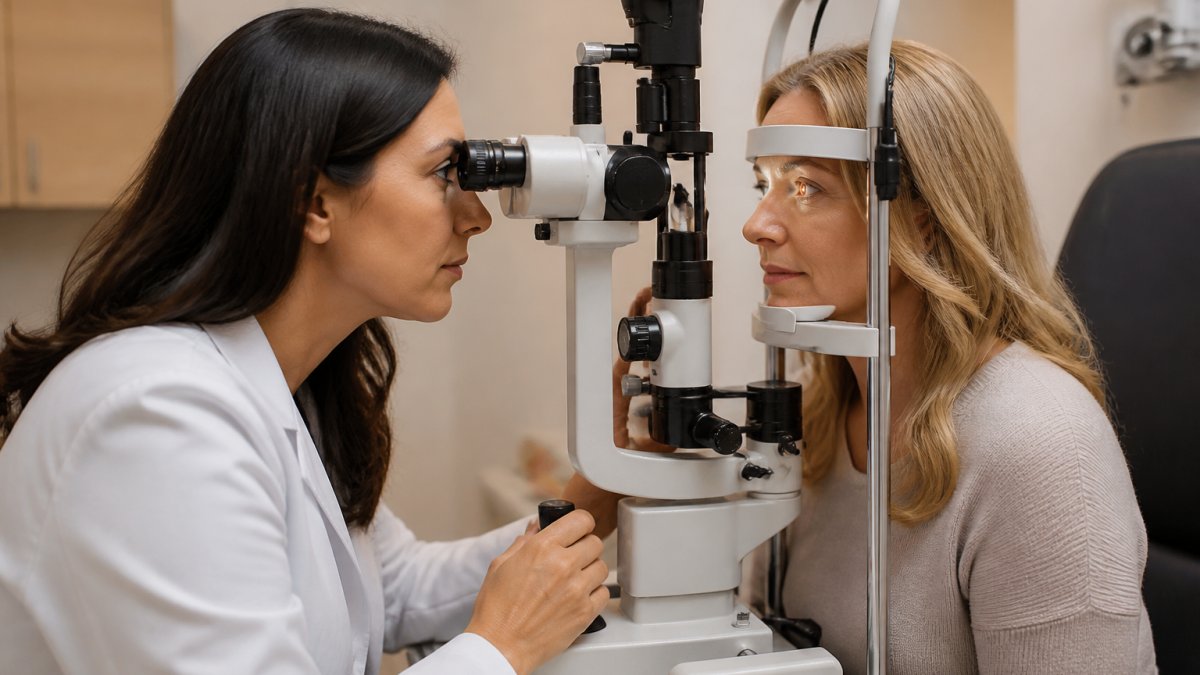
A comprehensive eye examination goes far beyond reading letters on a chart. It's a systematic assessment of your vision system, eye health, and often overall health: your optometrist evaluates eye pressure, the retina and optic nerve, peripheral vision, and how your eyes work together, checking for signs of disease you can't see yourself.
Beyond Vision Correction
Vision correction, the prescription for glasses or contacts, is only one part of what an exam reveals. Your optometrist also screens for early signs of glaucoma, cataracts, macular degeneration, and retinal disease by examining your blood vessels, lens clarity, and optic nerve function. These findings often catch disease years before it would affect daily vision.
Systemic Health Connections
Your eyes are windows into your systemic health. During an eye exam, an optometrist can see signs of diabetes, high blood pressure, high cholesterol, and autoimmune disease before those conditions show up elsewhere. Diabetic retinopathy, damage to retinal blood vessels from diabetes, is often detected during a routine exam, sometimes before a patient knows they have diabetes, and hypertensive retinopathy shows up in the blood vessels at the back of your eye.
Recognizing Early Signs of Eye Disease
Early detection of eye disease depends on knowing what to watch for and getting regular professional screening. Some changes are obvious, blurred vision, flashing lights, or a sudden increase in floaters. Others are subtle and require professional equipment to see.
Common Conditions Caught Early
Glaucoma often produces no symptoms until significant optic nerve damage has occurred, which is why testing is critical for anyone over 40 or with a family history (Understanding Glaucoma: Symptoms, Causes, Diagnosis, Treatment).
Myopia (nearsightedness) progresses most rapidly in children and young adults. Myopia control is a major focus in preventive care because high myopia raises the risk of serious eye disease later in life, including glaucoma, cataracts, and retinal detachment; early detection allows intervention strategies that slow progression.
Dry eye often goes undiagnosed because patients assume their symptoms are normal. Chronic dry eye can damage the corneal surface and affect vision quality. Early recognition and treatment prevent progression and reduce discomfort.
Age-related macular degeneration (AMD) can be detected in its early stages during a comprehensive eye exam, before vision loss occurs, enabling treatment options that preserve sight.
Screening Schedules by Age and Risk Level
A screening schedule is only useful if it reflects your risk, not the average patient's. Two people the same age can need exams two years apart because of family history, systemic disease, or medication use. Below is a practical framework you and your optometrist can adapt.
How Risk Factors Change the Interval
Most practitioners start with a baseline interval and shorten it for each additional risk factor. Common modifiers include:
- Family history of glaucoma in a parent or sibling, often moves you to annual exams starting in your 30s, sometimes earlier.
- Diabetes (type 1 or type 2), annual dilated exams are the standard, and some patients need them every 6 months if retinopathy is present.
- High myopia (roughly -6.00 D or higher), annual exams, because of elevated risk of retinal detachment, glaucoma, and myopic macular degeneration.
Children and Adolescents
- First comprehensive exam: by age 3, or earlier if a parent notices eye turn, poor tracking, or a family history of amblyopia or strabismus.
- School-age: annual exams are common, especially once screen use and reading load increase.
- Myopia detected: monitoring every 6 months is typical so progression can be measured and myopia-control options evaluated.
Adults 18-39
- No risk factors: every 1-2 years.
- One or more risk factors above: annually.
- Contact lens wearers: annually, regardless of prescription stability, because lens-related complications are often silent.
Adults 40-59
- No risk factors: every 1-2 years.
- Age 40+ with a family history of glaucoma: annually, glaucoma risk rises meaningfully after 40.
- Presbyopia onset: usually prompts an exam even if you were previously on a 2-year cycle, because near-vision correction and reading habits change.
Adults 60 and Older
- Baseline: annual comprehensive exams.
- With glaucoma, AMD, or diabetic retinopathy: frequency is set by the condition, often every 3-12 months depending on stability.
- After cataract surgery: follow the surgeon's post-op schedule, then return to routine optometric care.
A Simple Way to Remember It
With zero risk factors, you can usually stretch to 2 years. Add one risk factor and you're typically annual; add two or more, or an active diagnosis, and your optometrist will likely want to see you more than once a year. The schedule isn't a rulebook, it's a starting point your optometrist adjusts based on what the exam shows. (Source: The American Academy of Ophthalmology recommends comprehensive eye exams for adults)
Nutrition and Eye Health Supplements for Long-Term Vision
What you eat affects your eyes. Certain nutrients are essential for maintaining healthy vision and slowing age-related decline.
Evidence-Based Supplements and Nutrients
Lutein and zeaxanthin are carotenoids that accumulate in the macula and help protect against age-related macular degeneration; they're found in leafy greens, but supplementation may benefit those with limited dietary intake.
The evidence for supplementation is strongest for lutein, zeaxanthin, and omega-3 fatty acids in people with early-stage macular degeneration or at high risk for it.
Daily Habits and Digital Eye Strain Prevention
Modern life means extended screen time. Digital eye strain, temporary discomfort from prolonged near work, affects vision comfort and can worsen myopia progression in children.
The 20-20-20 rule is simple and effective: every 20 minutes of screen work, look at something 20 feet away for 20 seconds, letting your focusing muscles relax.
How Medications and Systemic Conditions Affect Eye Health
Your eyes are vascular, neural, and immune tissue, which is why so many systemic conditions and medications show up there first. Understanding the mechanism helps you know which symptoms to report and why your optometrist asks about seemingly unrelated conditions.
Diabetes and Diabetic Retinopathy
Chronic high blood sugar damages the small blood vessels in the retina (the CDC). Early changes include microaneurysms and tiny hemorrhages invisible to you but visible on a dilated exam; as damage progresses, vessels leak fluid (macular edema) or grow abnormally (proliferative retinopathy), both threatening vision. This is why annual dilated exams are standard for anyone with diabetes, and why your optometrist may coordinate with your primary care provider or endocrinologist if findings suggest blood sugar control needs attention.
Hypertension and Hypertensive Retinopathy
Elevated blood pressure can narrow, stiffen, and eventually damage retinal arterioles, from mild vessel narrowing to hemorrhages and optic nerve swelling in severe cases. Because the retina is one of the few places blood vessels can be viewed directly, an eye exam sometimes reveals poorly controlled blood pressure before other symptoms appear.
Autoimmune and Inflammatory Conditions
Conditions such as rheumatoid arthritis, lupus, Sjögren's syndrome, and thyroid eye disease can affect the eye through inflammation and immune-mediated damage. Common findings include chronic dry eye, corneal surface changes, uveitis (inflammation inside the eye), and, in thyroid eye disease, bulging eyes, double vision, and eyelid retraction, often requiring coordination between your optometrist and a rheumatologist or endocrinologist.
Medications With Ocular Effects
- Corticosteroids (oral, inhaled, topical, or periocular) can raise intraocular pressure and increase cataract risk with long-term use.
- Hydroxychloroquine (used for lupus and rheumatoid arthritis) can cause retinal toxicity; monitoring typically includes baseline and periodic retinal imaging or visual field testing per the prescribing guideline.
- Anticholinergics and some antihistamines and antidepressants can reduce tear production and worsen dry eye, and can affect pupil dilation.
What Monitoring Actually Looks Like
For most medication-related risks, monitoring means a baseline exam before or shortly after starting the drug, then periodic exams at an interval set by the prescribing protocol and your optometrist. Testing may include dilated fundus examination, retinal imaging, visual field testing, or ocular coherence tomography depending on the drug and risk, with the goal of catching changes while they're still reversible or manageable.
Why This Belongs in Preventive Care
Systemic disease and medication effects are among the most common reasons a routine eye exam turns into a referral. Catching them early is preventive care in the truest sense, it protects vision and sometimes surfaces a broader health issue.
Building Your Personalized Prevention Plan
Preventive eye healthcare isn't a generic checklist. It's a partnership between you and your eye care provider, tailored to your individual risk factors, age, and health status.
Working with Your Optometrist
Your optometrist needs your complete health history: family history of eye disease, systemic conditions like diabetes or high blood pressure, current medications, occupational eye demands, and lifestyle factors.
At Corner Optical, we use this information to build a prevention plan specific to your eyes and your life. We explain what we're looking for, why certain tests matter for you, and what the results mean.
Access and Navigating Referrals
Not all eye care happens in one place.
Some conditions are managed collaboratively: your optometrist handles routine monitoring and adjusts glasses or contacts while a specialist manages medication or surgery, with regular communication ensuring coordinated care.
Preventive eye healthcare isn't about perfect vision, it's about preserving the vision you have and catching disease before it steals sight.
Frequently Asked Questions
How can an optometrist help prevent eye problems?
Optometrists detect eye disease and systemic conditions in their early stages through comprehensive eye exams, often before you notice symptoms. They screen for glaucoma, diabetic retinopathy, and other conditions that can cause vision loss if untreated. They also provide personalized guidance on nutrition, digital eye strain habits, and myopia management to slow disease progression and protect your vision over time.
How often should I have a comprehensive eye exam for preventive eye healthcare?
General guidelines suggest exams every 1-2 years for adults under 65 with no risk factors, and annually for those over 65. People with diabetes, glaucoma, high myopia, or a family history of eye disease should be examined annually or more frequently based on their optometrist's clinical judgment. Children should be screened at birth, at age 3, and before school entry.
What are the early signs of eye disease I should watch for?
Early signs include blurred or distorted vision, floaters or sudden flashes of light, eye pain or persistent redness, halos around lights, difficulty seeing at night, and gradual vision loss in your peripheral vision. Dry eye symptoms such as burning, grittiness, or paradoxical excessive tearing can also indicate underlying conditions. Many serious eye diseases like glaucoma develop without symptoms, making regular screening essential even if your vision feels normal.
Which nutrients and eye health supplements support preventive eye care?
Lutein, zeaxanthin, omega-3 fatty acids, vitamins C and E, and zinc are nutrients associated with eye health. Foods rich in these include leafy greens, fatty fish, eggs, nuts, and citrus fruits. Some people benefit from supplements, particularly those with age-related macular degeneration or high risk factors. Your optometrist can assess whether supplements are appropriate for your individual health profile and recommend evidence-based options.
Can an eye exam detect other health problems beyond vision changes?
Yes. During a comprehensive eye exam, optometrists can observe signs of diabetes, high blood pressure, high cholesterol, autoimmune conditions, and even certain cancers through examination of blood vessels, the optic nerve, and retinal tissue. Early detection of these systemic conditions through eye screening can prompt timely medical intervention and prevent serious complications, making the eye exam a valuable preventive healthcare tool.
How do medications affect my eye health and vision?
Many medications can cause dry eye, blurred vision, light sensitivity, or color vision changes. Common culprits include antihistamines, decongestants, antidepressants, blood pressure medications, and steroids. Some medications increase the risk of glaucoma or cataracts with long-term use. Inform your optometrist about all medications and supplements you take so they can monitor for side effects and recommend protective strategies or adjustments if needed.
What daily habits can I adopt to protect my eye health?
Follow the 20-20-20 rule for digital eye strain: every 20 minutes, look at something 20 feet away for 20 seconds. Wear UV-protective sunglasses outdoors, eat a diet rich in antioxidants and omega-3s, stay hydrated, get adequate sleep, and don't smoke. Protect your eyes during sports and home repairs with appropriate eyewear. Manage systemic conditions like diabetes and high blood pressure through regular medical care and lifestyle choices.